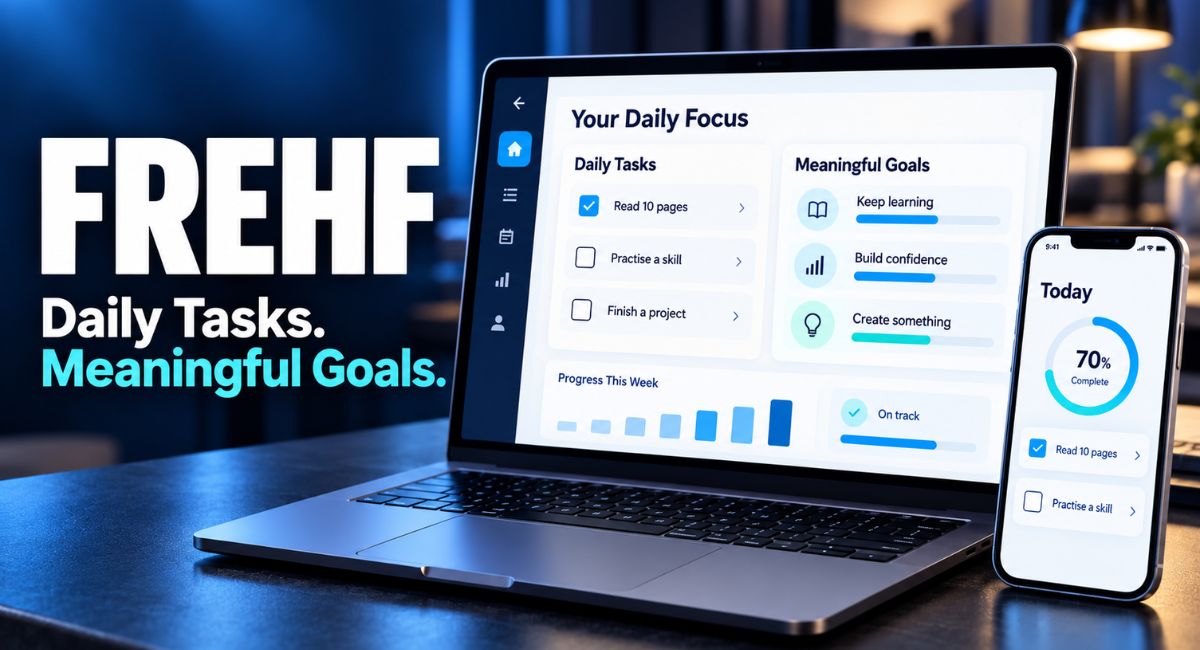
You can answer messages, finish small jobs, and reach the end of the day feeling that your main goal has barely moved. The problem may be that your daily choices do not match your plans. This Frehf guide looks at that gap through the planning ideas linked with the name. It offers simple steps you can try, with examples that show how ordinary tasks can support something you care about.
What Frehf Means in This Guide
An older search listing for the website using this name describes four ideas: connect goals with actions, use helpful information, understand human habits, and improve the approach over time. The live homepage currently shows a domain expiry message. This makes it hard to check the original details today, so the earlier description needs to be treated with care.
This article uses those ideas as a starting point for daily planning. The examples and routines below are practical suggestions developed for this guide. You can try them in a notebook, a calendar, or a basic task app. Judge them by whether they help you see what needs attention and why it matters.
Choose Goals You Have a Reason to Care About
Start with a result that would make a useful difference in your life. It could be passing a course, finishing a work project, or having more time for people you care about. Write down why you want it. A clear reason gives you something to return to when daily demands compete for your attention. Keep the wording personal and plain.
When applying Frehf to your own planning, choose one main goal for the period you are working on. For example, a student might want to improve English because a new job involves speaking with customers. That reason makes speaking practice relevant. It also helps the student decide whether an extra task supports the goal or simply fills an evening.
Turn a Wide Goal Into a Clear Result
A broad aim such as doing better at work can mean many things. Give it a result you can recognise. You might want to finish a draft report by Friday or reduce the number of errors in weekly orders. In this Frehf planning exercise, clear wording helps you choose actions that fit. Add a date when the goal has a real deadline.
Keep the result realistic for your situation. If you are learning English, completing three short speaking sessions this week may be a useful starting target. Becoming fluent in a few days would make the plan difficult to judge fairly. Your first target should give you a clear direction while leaving room to learn how much time and practice you need.
Link Each Task to the Result You Want
Before adding a task to your day, explain how it supports the chosen result. If your goal is a completed report, collecting missing figures has a clear purpose. Changing the cover colour several times may have little value at that stage. This check helps you notice the difference between work that moves the project forward and details that can wait.
A useful Frehf question is whether finishing the task will bring your goal closer. Write the answer beside the task if the link feels unclear. For a job application, checking the required skills and writing a relevant example both support the result. Spending an hour changing fonts may deserve less time. Small choices like these shape the work you actually complete.
Choose What Needs Your Best Attention
Look at your tasks and decide which one needs your strongest focus. Consider its effect on the goal, its deadline, and whether another person is waiting for it. Something easy may feel attractive because you can finish it quickly. However, a harder task may remove the biggest problem holding up the project. Give that task a clear place in your plan.
Imagine you need to send a proposal tomorrow. You could organise old files, answer general messages, or check the price details needed for the proposal. Checking those details deserves attention because the proposal depends on them. File organisation can wait for a quieter period. Making this choice before opening your inbox gives you a specific task to return to.
Give Important Tasks a Place in Your Day
An important task needs time on your calendar as well as space on your task list. A simple Frehf routine is to reserve a short work period for the action that most supports your goal. Decide when you will begin and what you will work on. A plan to draft the first section at ten is easier to follow than a plan to write sometime.
Make the starting action small enough to begin without much preparation. Open the right document, place the needed notes nearby, and decide which part comes first. If you have forty minutes, give that period one clear purpose. When it ends, record where you stopped. This makes the next session easier to start because you already know what remains.
Plan Around Your Real Time and Energy
Check how much time is truly available before deciding what the day can hold. Meetings, travel, household duties, and breaks all take space. A free hour between two commitments may be enough for a focused task, but it cannot hold several long jobs. Base your plan on the time you have instead of the amount of work you wish you could finish.
Notice when you can usually give difficult work your full attention. Some people find mornings suitable, while others have a quieter period later. Place demanding tasks where they fit your circumstances. Keep simpler work for shorter gaps. If your schedule changes often, prepare a smaller version of the main task so you still have a useful action available.
Make Useful Progress Easy to See
Choose a simple way to record movement towards the result. For a report, note which sections are drafted and which still need information. For language practice, record completed sessions and words you struggled to use. These notes give you something concrete to review. The number of hours spent working alone may not show whether the right part of the job moved forward.
The Frehf ideas discussed here include using helpful information to guide choices. In daily planning, that could mean noticing that you repeatedly wait for missing details before starting. Your next useful task may be to request those details earlier. Keep records short and relevant. A few clear notes are enough if they help you decide what to do next.
Notice the Habits That Keep Blocking You
When a task keeps moving to tomorrow, look at what happens just before you avoid it. You may open messages first, struggle to find materials, or feel unsure about the next step. Name the specific problem. Saying that you lack motivation gives you less to work with than noticing that the task has no clear starting action.
Change one part of the situation and see whether it helps. Put distracting alerts aside during your chosen work period. Keep the needed file ready. Replace a vague task such as work on the website with a clear action such as write the contact page text. A clearer start lets you test whether the difficulty comes from the task itself or its setup.
Leave Space for Routine Work and Surprises
A useful Frehf task plan also needs room for everyday duties. Messages, booking appointments, and keeping shared files organised may support your work even when they do not directly advance the main goal. Give these jobs enough time. Where possible, handle similar small tasks together so they do not interrupt every focused work period throughout the day.
Leave some open space when your work often involves unexpected requests. If a new job arrives, check its deadline and effect before changing everything. Decide which existing task will move if the new one takes its place. This makes the tradeoff clear. Otherwise, extra work can silently create a plan that is too full to complete.
Keep Shared Work Clear and Fair
When several people share a goal, explain the result and each person’s next action. A small team preparing a presentation needs to know who is checking figures, who is drafting slides, and when the work must be ready. Clear ownership helps everyone see where their task fits. It also makes it easier to spot missing work before the deadline approaches.
Check what each person needs from others. If a designer cannot begin until the text is approved, the approval date matters to the whole plan. Agree on a sensible order and speak up when something changes. Avoid assigning a task without checking whether the person has the time, information, or access needed to complete it.
Review Your Week and Adjust the Plan
Set aside a few minutes at the end of the week to compare your plan with what happened. Look at what moved the goal forward, what remained unfinished, and what caused delays. Use specific examples from your notes. If the draft is complete but unchecked, the next step is review. Adding more drafting time would miss the actual need.
Use this Frehf review to choose one useful adjustment for the next week. You might shorten the daily task list, request information sooner, or move focused work to a quieter time. Give the change a fair try before judging it. If your goal no longer fits your situation, update it and explain why. A plan should reflect real needs.
Try a Simple Plan for an Ordinary Workday
Suppose your goal is to send a finished report on Friday. On Wednesday morning, you notice that one section lacks figures. You request them, draft another section while waiting, and reserve time after lunch to add the information. Routine messages have their own short period. The day’s tasks follow the report’s needs instead of the order in which requests appeared.
This Frehf example brings the planning ideas together. The goal guides the tasks, missing information shapes their order, and available time sets a sensible limit. At the end of the day, you note what is complete and what still needs checking. Thursday’s plan can then begin with the remaining work. You have a clear reason for each important action.
Conclusion
Using Frehf as a starting point for daily planning means checking how your actions connect with a result you care about. Choose a clear goal, give useful tasks enough time, and review what actually happened. Keep everyday duties and changing needs in the plan too. Start with one goal and one planned work period, then adjust the routine as you learn what fits your day.
(FAQ’s)
1. What does Frehf mean in this article?
It refers to planning ideas drawn from an earlier website description, with practical examples developed for this guide.
2. Do I need a special app to follow these tips?
A notebook or calendar is enough to record your goal, choose tasks, reserve time, and review progress.
3. How can I tell whether a task supports my goal?
Explain what will change after you finish it and how that change helps your chosen result.
4. What should I do when an urgent task changes my plan?
Check its deadline and importance, then decide which planned task will move to make room.
5. How often should I review my progress?
A short weekly review is a useful starting point, with daily adjustments when deadlines or needs change.
Visit for more additional information: Loom Magazine