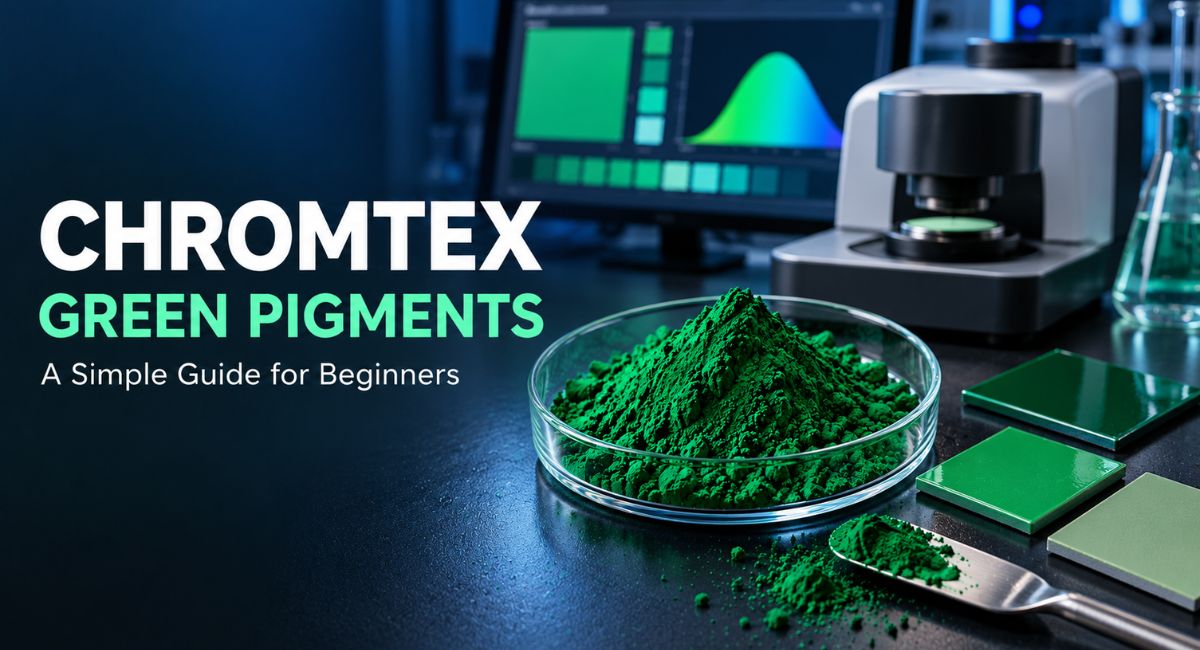
A green roof tile, a painted door, and a plastic part may all get their color from a pigment. Yet a bag of green powder cannot tell you how it will behave in every material. If you have come across Chromtex, understanding what the name means is a useful place to start. This guide explains the pigment range, the basic science behind its color, and the questions worth asking before choosing a grade. You will also learn why a small sample can be more useful than a bright picture on a screen.
What Is Chromtex?
This name identifies a range of synthetic chrome oxide green pigments offered by ZWUKSO, a Polish pigment supplier. The coloring material is based on chromium(III) oxide, written as Cr₂O₃. In simple terms, it is a manufactured green powder added to other materials during production. The supplier presents it as an industrial color ingredient, with several grades available for different needs.
The word “synthetic” means the pigment is made through a controlled manufacturing process. It does not describe a finished paint, a plastic object, or a complete building product. The powder provides color, while the rest of the mixture gives the finished item its other qualities. For example, the ingredients in a coating also help it stick to a surface and form a film.
How Chromtex Differs From Similar Names
The spelling matters when you search for information or request a product. Chromatex Chemicals is a separate company in Pakistan that supplies chemicals for textile preparation, dyeing, and finishing. A similar name does not mean the businesses sell the same products. Information about fabric softeners or textile treatments should not be used to describe this green pigment range.
When reading a product page, look for the supplier, material name, and full grade code. These details help you identify what is actually being offered. If a seller gives only a broad description such as “advanced color technology,” ask for more detail. A clear product identity is more useful than a long list of claims that cannot be linked to a specific material.
How Green Pigments Work
A pigment is a coloring material made of tiny solid particles. These particles usually remain separate within the material they color, rather than dissolving into it. They affect which parts of visible light are absorbed or scattered. That interaction with light produces the color we see. The Color Pigments Manufacturers Association describes this solid particle structure as a basic feature of pigments.
A dye works differently because it generally dissolves in the liquid used for its application. Paint pigments, by comparison, are spread through a binder, which helps hold them in place. You can think of the binder as the part that forms the paint film. This difference explains why adding green powder to water does not automatically create a useful paint or a fabric dye.
Where the Green Pigment Is Used
Chromtex has documented uses in paints, plastics, primers, and certain building materials. The supplier also lists applications involving concrete roofing, bricks, tiles, rubber products, and colored glass. These uses show that the range belongs mainly to industrial coloring. It is an ingredient that manufacturers select and test as part of a wider production process.
Consider a company making green roof tiles. It needs more than a powder that looks attractive in its bag. The chosen material must work with the tile mixture and the production method. A paint maker has a different task because the pigment must spread through a liquid coating. These examples explain why one color name cannot answer every question about suitability.
What Color Strength, Coverage, and Mixing Mean
Color strength describes how strongly a pigment changes the color of a mixture at a given amount. Coverage, often called hiding power, describes how well a coating hides what is underneath it. These properties are related, but they are not identical. A material can produce a strong color while the final coating still depends on its full recipe and thickness for coverage.
Mixing quality is another important factor. Tiny particles need to be spread evenly so that they do not remain in clusters. In coatings, poor particle distribution can affect appearance and color strength. BYK, a coatings specialist, explains the importance of distributing and stabilizing pigments within a liquid binder. This is why the right mixing method matters alongside the pigment itself.
How to Choose a Chromtex Grade
A grade is a particular version within a product range. The supplier lists codes such as GN, GA, GA-U, and GA-R. These labels identify products, but the letters alone do not explain which one suits your project. Ask for the technical data sheet for the exact code being offered. This document should help you compare the product’s stated properties with your needs.
Start by describing the finished item you want to make. Explain whether it is a coating, a concrete product, or a plastic component. Give the supplier a target color sample if possible, along with details of the base material and process. Ask which properties support the proposed choice. Also ask how the recommended addition amount is calculated. A percentage may refer to the binder, the cement, or another part of the mixture, so the basis must be clear. Confirm the meaning before comparing figures from different documents. This gives the discussion a clear purpose and makes sample testing more useful.
Using Green Pigment in Paints
When considering Chromtex for paint, remember that color is only one part of coating performance. The binder, other pigments, fillers, and additives also affect the finished product. A green powder that performs well in one recipe may need a different mixing approach in another. Follow advice for the specific coating system instead of assuming that any green pigment can be stirred into any paint.
For a practical trial, ask the paint supplier or formulator to prepare a small test coating. Use the intended surface and application method, then allow the coating to dry fully. Examine whether the color looks even and whether the film hides the surface as expected. If the result is poor, investigate the recipe and mixing process before simply adding more powder. Keep the test panel after approval, and note which paint batch produced it. That record can help when a later batch looks different or when another person needs to reproduce the same finish.
Using Green Pigment in Concrete
For concrete products, Chromtex should be considered alongside the cement, sand, water, and finishing method. Concrete color does not come from pigment alone. Davis Colors explains that changes in the base materials, water content, finishing, and curing can change the final appearance. This general principle matters when planning any colored concrete project, regardless of the pigment brand selected.
Imagine two sample tiles made with the same measured pigment amount but different cement colors. Their finished shades may differ because the background material has changed. For a fair comparison, keep the ingredients and production conditions consistent. Follow the concrete producer’s guidance on drying and curing, which is the process that helps concrete develop its properties. Approve a representative sample before ordering a large batch.
Using Green Pigment in Plastics
When assessing Chromtex for plastic products, ask the supplier to consider the exact plastic and production conditions. Pigment selection can involve shade, heat stability, mixing behavior, and resistance to other materials in the system. The Color Pigments Manufacturers Association includes these kinds of properties among the factors used to choose a pigment. A green appearance alone is not enough to judge suitability.
For example, a maker of garden parts should test the intended plastic mixture rather than rely only on a powder sample. The finished part is what the customer will see and use. Ask how the selected grade performs under the planned processing conditions. If outdoor use is intended, request evidence relevant to the finished material and exposure conditions.
How to Run a Useful Sample Comparison
A useful sample trial changes one main factor at a time. If you are comparing two grades, keep the base material, measured amounts, equipment, and mixing procedure the same. Give each sample a clear label and record exactly what went into it. Include the grade code, batch reference, weighing method, and date. This makes it easier to connect a visible difference with a particular change, rather than guessing after the samples have dried. Repeat the most promising trial to check whether you can achieve a similar result again.
Compare the finished samples under the same lighting and against the same background. For paint, use similar coating thicknesses. For concrete, compare samples at a similar stage of drying and curing. Davis Colors notes that fresh, wet concrete can look darker than dry concrete. Keep an approved physical sample as a reference for later batches, since a phone photograph may not capture small shade differences.
What to Consider Before Buying
Before ordering Chromtex, compare the total cost of achieving an acceptable result. The price per kilogram is useful, but it is only one part of the decision. Ask about sample availability, order size, delivery terms, and technical support. Confirm whether the quoted product is the same grade you tested. A cheaper offer is less useful if it cannot produce the required finish consistently.
A simple purchasing example helps explain this. One supplier may offer a lower bag price, while another provides a grade that needs less adjustment in your production process. Your own trials can help reveal that difference. Record the amount used and whether the finished sample passes your requirements. Ask for a written quotation that identifies the grade and packaging, rather than accepting an offer described only as green pigment. When you reorder, keep those details with your approved sample and trial notes. This gives you a practical basis for comparing offers without assuming that price always reflects performance.
Handling the Powder and Reading Product Documents
Before using Chromtex, obtain the current Safety Data Sheet for the exact grade. This document explains handling, exposure controls, storage, and disposal. The published sheet for the GN grade notes that dust from handling or processing may irritate the eyes, skin, nose, and throat. Follow the applicable controls and protective equipment requirements for your task and workplace.
Keep product labels and grade information available wherever the material is used. Do not transfer powder into an unmarked container or assume that instructions for another product apply. An industrial application also does not establish suitability for food, cosmetics, or children’s craft materials. If you need a product for a special use, ask for documentation covering that use before making a purchase or starting a trial.
Conclusion
Chromtex is easier to understand when you view it as a green pigment range used within a complete manufacturing recipe. Its usefulness depends on the selected grade, the material being colored, and the production method. Start with clear product information, explain your intended use, and test a representative sample. Learn the difference between color strength, coverage, and mixing quality so that you can ask better questions. A careful comparison will tell you more about suitability than a product name or an attractive color image alone.
(FAQ’s)
What Is Chromtex Used For?
It is used to add green color to products such as paints, plastics, and certain concrete materials.
Is a Green Pigment the Same as a Dye?
No. Pigments generally remain as solid particles, while dyes generally dissolve in their application liquid.
Can I Use the Powder Directly as Paint?
The powder needs a suitable binder and formulation to become a useful coating.
Why Can the Same Pigment Produce Different Shades?
The base material, pigment amount, mixing process, and finished surface can affect the shade.
How Can I Choose the Right Grade?
Ask the supplier for application advice, compare technical data, and test a sample in your intended material.
You may also read: SoSoActive Explained With a Simple Guide to Its Online Content
Visit for more additional information: Loom Magazine