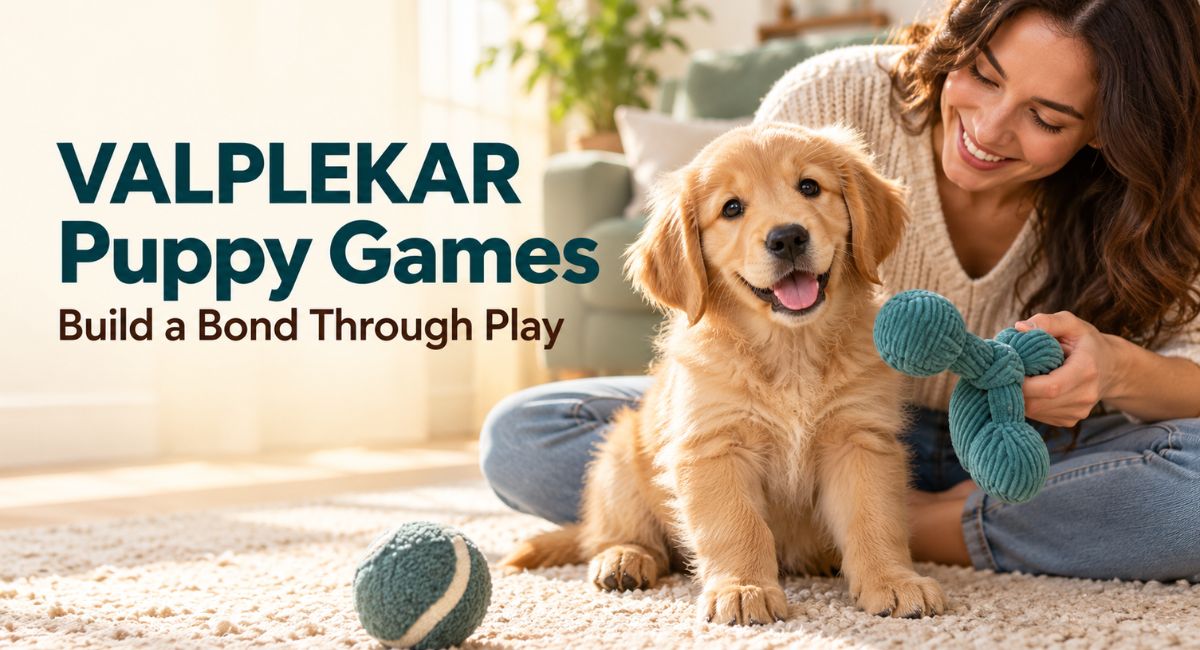
Your new puppy may follow you around one moment, then hide behind a chair the next. Everything in your home is new, including you. Play gives you a gentle way to get to know each other without asking too much too soon. Valplekar activities can turn small daily moments into chances to build trust. You do not need a garden full of toys or a strict training plan. A soft toy, a little space, and patient attention are enough to begin. The aim is to help your puppy enjoy being with you.
What Does Valplekar Mean?
Valplekar is used to describe puppy games and puppy play. The word is linked to the Swedish words “valp,” meaning puppy, and “lekar,” meaning games. In practical terms, it can include searching for food, chasing a soft toy, or finding an owner nearby. It is useful to understand it as a general description of play, rather than the name of one special training method.
For a new owner, the most helpful question is which games your puppy enjoys. Some puppies love carrying toys, while others prefer sniffing around a room. A shy puppy may first want to watch you from a safe distance. Let these preferences guide your choices. You can offer different activities over time, but there is no need to teach every game during the first week.
Why Shared Play Helps Build Trust
A bond grows through repeated experiences that feel safe and pleasant. During a game, your puppy learns how you move, speak, and respond. When you offer a toy, reward a small effort, or stop when they need space, you become easier to understand. Play also gives you time to notice their habits. You may learn that they enjoy gentle tug but dislike fast movements.
The value of Valplekar comes from this shared attention. Watch your puppy instead of checking your phone between turns. Offer rewards they actually enjoy, such as food, another turn with a toy, or gentle praise. Touch is only a reward when your puppy welcomes it. Choosing something they like makes it easier for them to learn that spending time with you brings good experiences.
Prepare a Safe Place for Puppy Games
Before trying Valplekar, choose a quiet room with enough clear floor space. Move cables, shoes, small objects, and anything your puppy could swallow. Put down a secure rug if the floor is slippery. Choose toys made for puppies that are large enough not to swallow whole. Check them for loose parts or damage before each session. Keep fresh water available, especially when the room is warm.
Have a few small rewards ready so you can respond quickly. Pieces of your puppy’s usual food may work well and can come from their daily allowance. Supervise games with toys, towels, or other materials that could be chewed apart. If you want to play outdoors, ask your vet which areas are suitable while vaccinations are underway. A calm indoor game is a useful starting point.
Start With the Name Game
Begin by sitting or standing close to your puppy in a quiet room. When they look towards you on their own, say “yes” and offer a small reward. After a few easy successes, say their name once. Reward them as soon as they turn towards you. Keep your voice friendly. Their name should become a signal that paying attention to you is worth doing.
This simple Valplekar activity creates a starting point for other puppy training games. If your puppy ignores their name, avoid repeating it louder and louder. Wait for an easier moment, move closer, or reduce distractions. You might practise while they are awake and relaxed after a toilet break. Stop after a few successful turns. A short, clear lesson is easier to understand than a long session.
Try Gentle Tug With a Soft Toy
Offer a soft tug toy and let your puppy take hold. Keep it low so their feet stay on the ground. Let your puppy do the tugging rather than pulling hard, lifting them, or shaking their head. Give them chances to hold the toy and enjoy it. The game should feel comfortable for both of you. You do not need to win every round to teach good habits.
Gentle tug can make Valplekar enjoyable for puppies that like shared toy play. To encourage a release, stop moving the toy and offer a small food reward as a trade. When they let go, reward them and offer another turn. Introduce “drop” once the action becomes familiar. Avoid forcing their mouth open. If they seem uncomfortable, choose another activity and check whether the toy suits them.
Roll a Toy for a Short Fetch Game
Fetch can start with a soft toy rolled a short distance across the floor. Let your puppy walk towards it and investigate. If they pick it up, encourage them back with a friendly voice. Reward them for coming near you, even if they do not bring the toy. Young puppies need time to learn the different parts of retrieving. Each small effort gives you something to build on.
Use a second toy or a food reward to encourage a trade when they return. Avoid chasing your puppy to take the first toy, since this can turn the game into keeping away from you. Keep the distance short and avoid high throws, repeated jumping, or sharp turns. Some puppies enjoy chasing but never become keen retrievers. You can still share a pleasant game without expecting a perfect return.
Make Hide and Seek Easy to Win
Ask another adult to stay calmly with your puppy while you move a short distance away. Start beside a chair or doorway, where you are still easy to spot. Call once and let your puppy approach. When they find you, offer a reward and friendly praise. Make the first few rounds very easy. Finding you should be the fun part, rather than solving a difficult puzzle.
As your puppy understands the game, change your position slightly. This Valplekar activity can help make coming towards you rewarding. Avoid hiding somewhere that makes them worried or leaving them alone to search through the house. If they struggle, step into view and help them succeed. Play in a secure area without access to stairs or open doors. Make the game easier whenever your puppy seems unsure.
Use Sniffing Games for Slower Play
Place a few pieces of your puppy’s usual food in plain sight on a clean floor. Let them watch you put the food down, then say “find it.” Give them time to sniff and eat without constant instructions. Once they understand, place pieces a little farther apart or partly behind a safe toy. Keep everything at ground level and within an area you can easily supervise.
Sniffing adds a different pace to Valplekar and gives curious puppies something to investigate. You can sit nearby and help by pointing towards a piece they missed. Avoid making the search so difficult that they become frustrated. If you use a towel, watch closely and remove it if your puppy starts chewing or swallowing the fabric. Take the food used for these games into account when preparing meals.
Teach a Simple Nose Touch
Hold an open hand close to your puppy’s nose without pushing it towards their face. Many puppies will naturally sniff it. Say “yes” when their nose touches your palm, then give a reward with your other hand. Repeat a few times, letting them choose to approach. If they seem confused, make the distance smaller. Keep your fingers relaxed and still so your hand does not become a moving toy.
Once your puppy touches your hand often, add the word “touch” as they make contact. With practice, this can become a useful way to guide them a small distance without pulling them into position. It also creates a quiet game for a small room. If they begin biting your fingers or pawing at you, pause and make the next attempt easier. Reward a gentle nose touch rather than repeated grabbing.
Notice When Your Puppy Needs Space
Look at your puppy’s whole body during play. Loose movement, a relaxed face, and choosing to return often suggest they are comfortable. A play bow, with the front lowered and the back raised, may invite another round. A wagging tail alone does not tell you everything. Watch what happens when you stop moving the toy. Your puppy should have room to approach again or walk away.
Good Valplekar sessions allow that choice. Turning away, a tucked tail, a stiff body, or repeated attempts to leave are reasons to pause. Lip licking and yawning can also show discomfort, depending on the situation. For a shy puppy, sit slightly sideways and offer an easy game at a comfortable distance. Avoid pulling them closer or following them with a toy. Quiet company may be enough for that moment.
Handle Play Biting Without Punishment
Puppies explore with their mouths, and their teeth may catch your hands during play. Keep suitable toys nearby so you can redirect their attention. If teeth touch skin, become still and calm instead of waving your hands or making excited noises. Pause the game briefly if needed. When your puppy is ready, offer a toy that gives them enough space to bite without catching your fingers.
Avoid shouting, hitting, or holding their mouth shut. These actions can frighten your puppy and make friendly contact harder. Notice whether biting becomes stronger near the end of a session. Your puppy may need rest or a quieter activity rather than more play. Children should have adult supervision and should stop if play becomes rough. Ask your vet for advice if biting is severe, causes concern, or comes with signs of pain.
Build a Routine With Play and Rest
Fit Valplekar into moments when your puppy is awake, comfortable, and ready to interact. After a toilet break, you might try a few name game turns. Later, a short toy game could provide shared fun, followed by quiet time. Another part of the day could include an easy food search. You do not need to follow an exact clock. Match the activity to your puppy’s mood and energy.
Begin with just a few minutes and stop sooner if your puppy loses interest. They need plenty of chances to sleep without being disturbed. Use a simple finishing phrase, such as “all done,” then allow them to settle. Everyone at home should use similar words and gentle rules. Over time, you can notice which activities they enjoy most and adjust the routine. Success means a willing, comfortable puppy, not a longer play session.
Conclusion
Valplekar can help you build a bond through everyday games that your puppy enjoys. Start with an easy name game, gentle toy play, or a small food search. Reward little efforts, give your puppy choices, and finish before the activity becomes tiring or frustrating. You will learn more from watching their response than from trying to complete every game perfectly. A warm relationship develops through many small moments of trust, including the quiet time you spend together after play.
(FAQ’s)
1. What is a good first game for a new puppy?
The name game is an easy choice because it rewards your puppy for looking towards you.
2. How long should a puppy play session last?
Start with a few minutes and stop earlier if your puppy becomes tired, worried, or distracted.
3. Can puppy games help with training?
Yes, rewarding attention, coming towards you, and releasing toys can support useful everyday skills.
4. What if my puppy does not like fetch?
Try gentle tug, a simple food search, or nose touches to find an activity they enjoy.
5. Should I wake my puppy for playtime?
No, let them sleep and offer games when they wake and are ready to interact.
Visit for more additional information: Loom Magazine