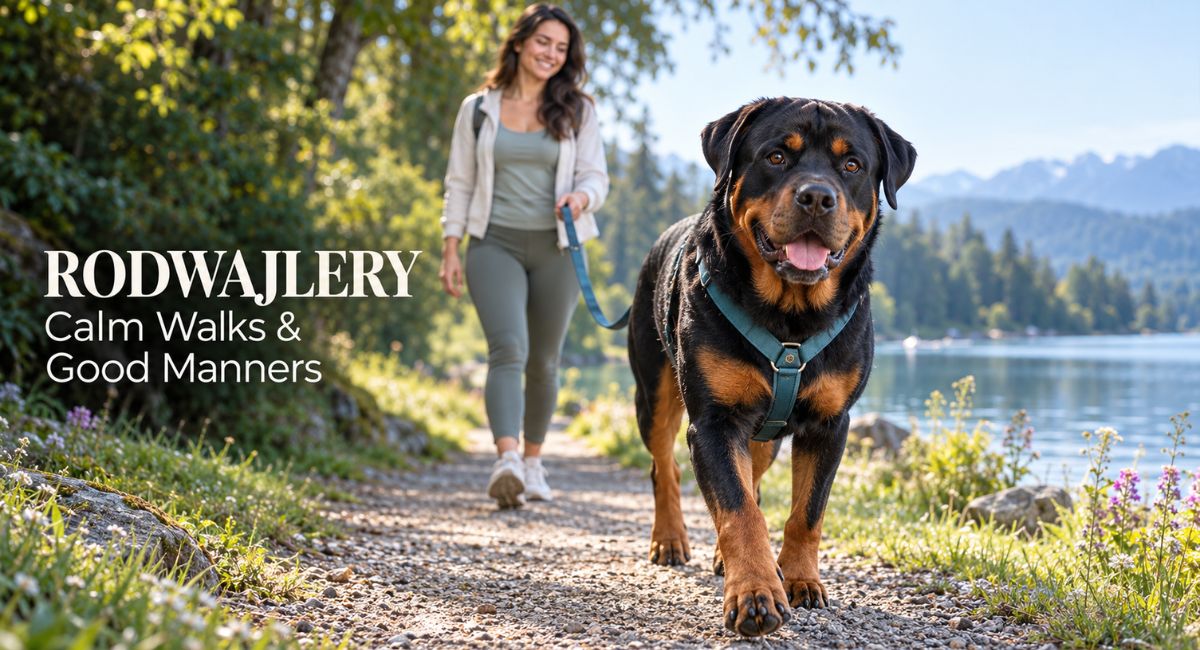
Your dog spots a pigeon, the lead pulls tight, and a simple walk starts to feel like hard work. At home, the same dog may jump at visitors or rush through an open door. These moments can be tiring, especially with a large dog. Rodwajlery training becomes easier when you break everyday skills into small steps. Clear signals, useful rewards, and regular practice give your dog a fair chance to learn. The goal is a walk you can both enjoy and habits that make daily life easier.
Understanding the Dog Behind the Name Rodwajlery
Rodwajlery appears online as an informal spelling linked to the Rottweiler. It is not the recognised name of a separate dog breed. In this article, the term refers to Rottweiler dogs. These are strong working dogs, so walking skills and polite greetings deserve attention from the start. However, strength does not tell you how an individual dog feels or learns.
Watch your own dog before choosing a training plan. A confident puppy, a nervous rescue dog, and an older pet may need different starting points. Begin with tasks your dog can manage in a familiar place. For puppies, ask your vet about safe ways to meet people and experience new places while their vaccinations are still in progress.
Use Rewards That Make Learning Clear
Reward-based Rodwajlery training means giving your dog something they enjoy after a useful action. For example, reward a loose lead, a calm greeting, or looking towards you when asked. Small, soft treats are easy to give during practice. Choose food that suits your dog’s diet, and include training treats in their daily food allowance.
Timing helps your dog understand what earned the reward. Say a short marker word, such as “yes”, at the moment they do the right thing, then give the treat. First, teach that this word always predicts a reward. When learning a new skill, reward each successful attempt. Later, mix food rewards with other things your dog enjoys, such as praise, play, or permission to sniff.
Choose Comfortable Walking Equipment
Use a well-fitting harness and a strong, fixed-length lead suitable for your dog’s size. Check the fit and fastenings before leaving home. Your dog should be able to move comfortably, and the equipment should stay secure. Introduce a new harness gradually, using treats while your dog becomes comfortable wearing it.
Equipment helps you manage a walk while training develops. Avoid shock collars, prong collars, choke chains, and sharp lead jerks. These methods can cause pain or fear. Choose comfortable equipment alongside reward-based teaching. If your dog can pull you off balance, ask a qualified trainer to assess your walking setup and handling before practising in busy places.
Teach Your Dog to Check In With You
A dog that looks towards you during a walk gives you a chance to guide the next step. Start in a quiet room. When your dog chooses to look at you, say your marker word and reward them. Repeat this several times without asking for anything else. This makes checking in a useful habit.
Once your dog often looks towards you, add their name just before they turn. Reward the response, then practise in the garden or another safe outdoor space. During Rodwajlery walks, reward voluntary check-ins too. If your dog ignores their name, avoid repeating it again and again. Reduce the distraction or move somewhere easier, then try when they can pay attention.
Make Leaving the House Part of Training
The walk starts before you reach the pavement. Some dogs become excited as soon as they see their lead. Practise clipping it on during quiet moments, and reward four paws staying on the floor. If the front door is too exciting, begin at an indoor doorway where your dog finds waiting easier.
With the lead attached, reward a brief pause beside the closed door. Touch the handle, then open the door a little while your dog remains calm. Build up slowly. If they rush forward, stop the exercise and make the next attempt easier. Keep paws clear when closing the door. Once your dog can wait comfortably, use a release word, such as “okay”, and walk through together.
Build Loose Lead Walking in Small Steps
Loose lead walking means the lead hangs with some slack while your dog moves near you. It does not require a perfect heel position throughout the walk. Begin in a quiet area and reward your dog for standing beside you. Take one step, mark their choice to stay nearby, and give a treat.
Gradually practise two or three steps before rewarding. Give the treat near your leg so your dog learns where rewards happen. Keep the first attempts short enough for success. When this becomes easy, move to a quiet outdoor route and return to frequent rewards. Rodwajlery lead training needs practice in different places because new smells and movement can make a familiar skill harder.
Respond to Pulling Calmly
If your dog pulls towards an interesting smell, pause before continuing forward. Wait for the lead to become loose, encourage them back towards you, then reward and move again. This teaches that walking with a loose lead helps the journey continue. Practise where you have enough room to stop safely.
Look at why pulling happens. A dog trying to reach a smell needs a different response from one frightened by traffic or another dog. When your dog is worried, guide them towards more space rather than keeping them close to the problem. Notice where pulling often begins and change your route or reward earlier. For example, give several rewards for staying nearby before you reach a favourite gate.
Leave Enough Space Around Distractions
Busy pavements can be difficult for Rodwajlery dogs that become excited or worried around others. Choose routes where you can see ahead and move away easily. When another dog appears, keep enough distance for your dog to remain comfortable. Reward calm noticing or looking back towards you. Your dog does not need to greet every animal they pass.
Watch the whole body for signs of discomfort. Freezing, turning away, a tense body, or repeated lip licking can mean your dog needs more space, depending on the situation. If barking or lunging begins, calmly move away and let them recover. Avoid forcing a greeting or holding them nearby to “get used to it”. Repeated reactions need a training plan from a qualified behaviour professional.
Give Sniffing a Place in the Walk
Sniffing helps dogs gather information about their surroundings. Allow safe sniffing breaks between short periods of walking practice. After a few good steps beside you, you might say “go sniff” and allow your dog to investigate a safe patch of grass. This gives them a useful reward beyond food.
A Rodwajlery walk can include movement, learning, and time to use the nose. Plan a route with room for these different activities. At home, a simple search game can provide more interest. Hide a few pieces of their usual food in an easy, safe place and let them find it. Supervise food games, adjust meal amounts, and include quiet rest in the day. Match activity to your dog’s age and health.
Teach Greetings With Four Paws on the Floor
Jumping can become a habit when it brings attention. Begin greeting practice with an adult your dog already feels comfortable around. Keep your dog on a lead with enough space to remain relaxed. Ask the helper to approach slowly, then reward your dog before they jump. Four paws on the floor is a clear starting goal.
If your dog jumps, the helper can step back and pause the greeting. Make the next approach easier by starting farther away. A comfortable sit can also help if your dog already knows it, but avoid forcing the position. For Rodwajlery greetings, tell visitors the plan before they arrive. Use a suitable barrier when practice is too difficult, and closely supervise all contact with children.
Practise Leaving Unwanted Things Alone
The “leave it” cue helps you guide your dog away from something they should not pick up. Begin with a dull, safe item and a better reward in your other hand. Let your dog notice the item. When they turn away from it, mark that moment and reward from the other hand.
Once turning away becomes reliable, say “leave it” just before presenting the item. Practise gradually in new places, then with safe items on the floor. Keep control of the practice item so your dog cannot grab it. If they struggle, return to an easier stage. Leaving an item alone and dropping one already in the mouth are different skills. Practise dropping through a fair trade with a toy and a better reward.
Build Recall Before You Need It Outdoors
Recall means coming back when called. Start indoors or in a secure garden. Say your dog’s name, use a clear cue such as “come”, and reward them when they reach you. Begin nearby and increase the distance slowly. Make returning worth the effort with a treat or a short game.
For outdoor Rodwajlery recall practice, use a suitable long line attached to a harness in an open, safe area. Handle it carefully so it does not tangle around people or objects. Keep ordinary walks on a shorter lead near roads. Avoid calling only when the fun must end. Sometimes reward the return and let your dog explore again. Continue using a lead wherever returning reliably is uncertain.
Help Your Dog Settle at Home
Good manners include being able to relax while you cook, work, or talk to visitors. Place a comfortable mat in a quiet area and begin when your dog is ready for a calm activity. Reward relaxed behaviour near the mat, then gradually reward resting on it. Give treats quietly so the reward does not turn the exercise into an exciting game.
Look for real relaxation, such as resting the head or shifting into a comfortable position. Build the time between rewards slowly, then add mild distractions. You might stand up briefly or ask someone to walk past at a distance. If your dog keeps getting up, reduce the difficulty. Keep this resting area welcoming, and allow your dog to leave. Regular undisturbed rest supports the daily routine.
Keep Practice Short and Consistent
Build Rodwajlery training around small sessions that fit your day. For example, practise attention for two minutes before a quiet walk, reward loose lead steps outside, and try settling later at home. Work on one clear skill at a time. Finish while your dog is still comfortable and interested.
Everyone who walks or greets your dog should follow the same basic plan. Agree on cue words and how to reward useful behaviour. Keep a simple record of progress, such as how many loose lead steps your dog can manage or which routes feel easier. Increase difficulty gradually instead of changing distance, location, and distractions together. If a skill becomes harder, return to an easier version and build from there.
Know When to Ask for Help
Seek professional support if your dog repeatedly lunges, snaps, guards items, or pulls so strongly that you cannot walk safely. A qualified trainer who uses rewards can help with everyday skills. Fear, aggression, or serious behaviour concerns may need a qualified behaviour professional working with your vet. Arrange a health check when behaviour changes suddenly, since pain or illness may be involved.
While waiting for help, choose quieter routes and prevent difficult encounters. Use suitable barriers at home to give visitors and your dog space. Avoid punishing growling, which can be a warning that the dog is uncomfortable. Explain the situations clearly to the professional, including what happened just before the reaction. This gives them useful information for a plan suited to your dog.
Conclusion
Calm Rodwajlery walks and good manners develop through clear teaching, useful rewards, and practice your dog can manage. Start with attention, a relaxed exit, and a few loose lead steps. Add greetings, recall, and settling as those basics improve. Allow sniffing and rest, and seek help when safety or fear becomes a concern. Notice small improvements and build on them at your dog’s pace.
(FAQ’s)
1. What does Rodwajlery mean?
It is an informal online spelling linked to Rottweilers, rather than the recognised name of another breed.
2. How long should a training session last?
Try a few minutes at a time, ending sooner if your dog loses interest or becomes tired.
3. Why does my dog keep pulling on walks?
Exciting smells, fear, or a learned habit can cause pulling. Notice the cause and adjust the training.
4. Should I use treats for Rodwajlery training?
Yes, suitable treats can reward learning. Include them in the daily food allowance and use other enjoyable rewards too.
5. What should I do if my dog barks at other dogs?
Create more distance and avoid forced meetings. Seek qualified help if barking or lunging keeps happening.
You may also read: Wattios Explained Through the Power Labels on Home Appliances
Visit for more additional information: Loom Magazine