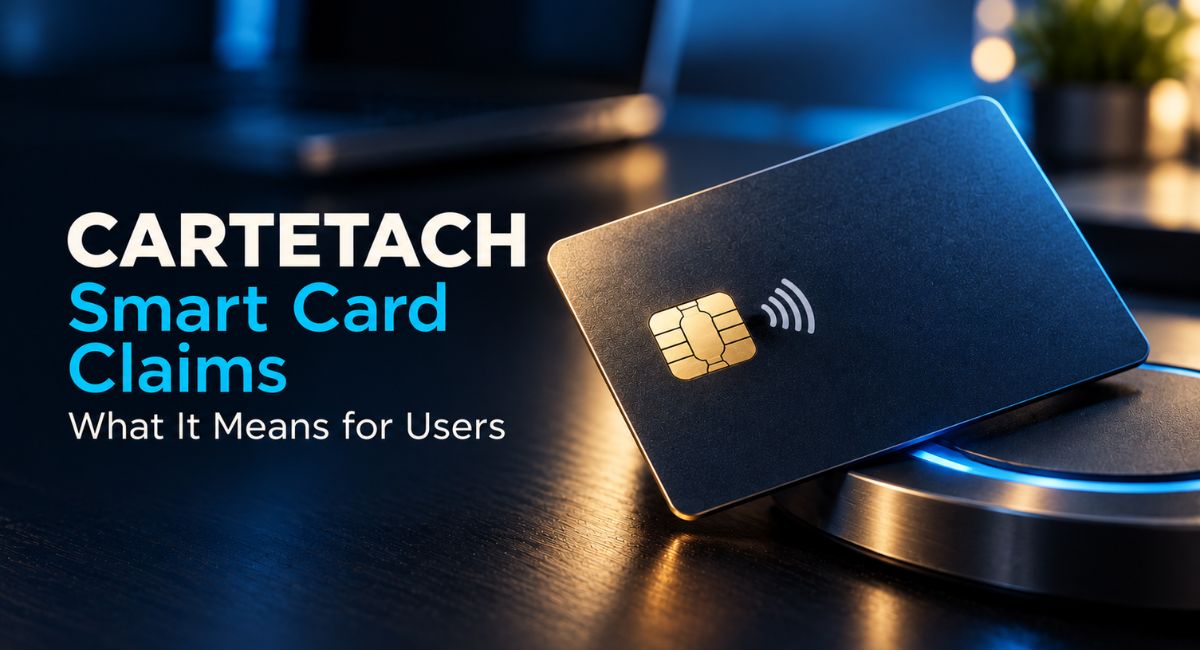
A single card for shopping, travel, and office entry sounds useful. It could mean less searching through your wallet and fewer things to carry. That is the appeal behind many descriptions of Cartetach. However, a useful idea needs more than a list of attractive features. Users need to know who provides the card, where it works, and what happens when something goes wrong. This guide explains the main smart card claims, the technology behind similar services, and the details worth checking before sharing information or paying for a product.
What Is Cartetach Supposed to Be?
Some online descriptions present the name as a smart card concept that brings payments, identity checks, and access control together. However, the research for this article, completed on 22 October 2026, did not identify a verified manufacturer or official technical documents for that proposed product. Its availability, supported services, prices, and security features therefore remain unconfirmed. Readers should treat specific performance promises as claims that need supporting evidence.
This gap does not prove that the name could never refer to a real product. It means there is not enough reliable information here to judge one. A useful starting point would be a clearly named provider with product instructions, contact details, and terms of service. Those details would allow users to check the offer with the banks, employers, or travel operators it claims to support.
How Smart Cards Work in Everyday Life
A smart card contains a small electronic chip. Depending on its design, it can store information and carry out checks when connected to a suitable reader. Contact cards need a physical connection, such as insertion into a payment terminal. Contactless cards communicate over a short distance. The NFC Forum describes near field communication, or NFC, as a technology that supports this kind of close wireless connection.
The chip needs software and a supporting service to do something useful. EMVCo explains that its payment chip technology creates a unique security code for each transaction, helping the system check that the card is authentic. Other card applications can serve different purposes. Understanding this basic setup helps readers assess a new offer without assuming that every chip card has the same abilities.
The Claim of One Card for Many Tasks
The central Cartetach claim is convenience through combining services. In a working system, one card could potentially hold separate permissions for different tasks. Imagine using a card to enter an office and pay at its cafeteria. That could reduce the number of cards an employee carries, provided both services support the arrangement. This is an example of the idea, rather than evidence of a confirmed deployment.
Each service would still need to approve and manage its own part. An employer controls building entry, while a payment provider controls the payment account. Placing those functions on one object would not automatically connect their systems. Users should ask which organisations actually support the card and whether those organisations confirm the connection themselves. A broad promise to replace every card needs very clear evidence.
Contactless Payment Claims Need Specific Proof
When Cartetach is described as a payment card, the first question is who issues it. A chip and wireless connection alone do not establish a working payment service. The offer should explain which payment network or account it uses, where transactions are accepted, and which countries are supported. Users also need clear instructions for checking spending and getting help with a failed transaction.
A demonstration should show more than a card touching a reader. Look for evidence that a payment was completed through the named service. EMVCo’s contactless specifications support communication between payment devices and terminals, but a description of that technology does not confirm this particular offer. Before relying on any claimed bank partnership, check with the bank through contact details you already trust.
Digital Identity and Building Access
Cartetach descriptions may also mention digital identity. This can mean different things, from confirming a person’s name to checking permission to enter a building. A useful product description should explain exactly what is being checked. For example, an employee card might confirm that its holder has permission to enter a particular office. That is a narrower purpose than proving identity for every possible service.
For a proposed workplace system, ask who adds users, changes permissions, and removes access when someone leaves. Also ask what happens if the reader cannot reach its supporting service. A practical demonstration could include a valid entry attempt and an attempt with an expired permission. These examples would tell a buyer more than a general promise of fast and secure identification.
What the Security Claims Need to Explain
Cartetach security claims need details about the protection offered and the problems it is designed to prevent. Words such as “advanced” and “secure” provide little help on their own. The NFC Forum explains that security involves several parts of the system, including devices, applications, and additional protection methods. A short wireless range is one part of the picture, rather than a complete security assessment.
Look for independent test results that name the product version and the part examined. A test of one chip would not, by itself, explain how a connected app handles account recovery. Ask what prevents an unauthorised person from using a lost card and how software problems are fixed. Clear answers should describe both the protection and its limits in language ordinary users can understand.
Encryption and Tokenisation in Simple Words
Encryption changes readable information into a protected form that requires the right key to read. Tokenisation replaces sensitive information with a substitute value. EMVCo explains that payment tokenisation replaces a card’s main account number with a payment token. Depending on the arrangement, that token can be limited to a particular device, merchant, or payment situation. These methods serve different roles in protecting information.
Neither term should be treated as proof that every part of a service is protected. For example, a token used during payment does not explain how customer support checks someone’s identity. If a seller mentions these methods, ask which information is protected and where the protection applies. The answer should also explain who manages the system and what happens if an account needs to be recovered.
Checking Compatibility With Your Daily Routine
Cartetach compatibility would matter most in the places you actually use a card. A product might support one workplace system without supporting your local transport service. Ask for an exact list of supported organisations, devices, and services. Statements such as “works with modern readers” leave too much unclear. A reader being able to communicate with a card does not establish permission to use every service.
Think through a normal day before judging the benefit. You might need a bus pass, an office badge, and a shopping payment method. Check each use separately with the organisation responsible for it. If only one task is supported, the card may offer less convenience than expected. Keep your existing access and payment methods available until the proposed replacement has been confirmed and tested.
What Happens if the Card Goes Missing?
Remote locking is another feature worth examining carefully. A connected service may allow someone to suspend an account or permission, but users should ask what that action actually blocks. Does it stop payments, building entry, or both? How quickly does the change reach every relevant system? An app displaying “locked” should come with a clear explanation of the effect.
Recovery matters just as much as locking. Find out how to report a missing card without access to the companion app. Ask whether replacing it requires setting up every service again and how long delivery takes. If the card combines several daily tasks, losing it could cause several problems at once. A clear replacement process and a practical backup option would therefore be important parts of the offer.
Privacy Questions Behind Connected Services
Cartetach privacy claims should explain what information each connected organisation could see. Users need to know whether payment records, entry logs, and identity details stay separate. Sharing one physical card does not answer that question. A useful privacy notice should identify the organisations handling information and describe why they need it, how long they keep it, and whether they share it.
Consider a simple question: could an employer see personal purchases made through the same card? Do not assume either answer without checking the design and privacy terms. Also ask what happens to stored records after an account closes. If the provider cannot explain these matters clearly, users lack information needed to judge the service. Convenience is easier to assess when the information flow is understandable.
Checking Costs, Apps, and Customer Support
The purchase price would be only one part of the cost to examine. Ask about account fees, subscriptions, replacement charges, and any service-specific costs. These are questions for a proposed provider, not confirmed charges for this product. Request the full terms before deciding. A low starting price would mean little if the services needed for daily use required additional payments.
Any companion app should have a clearly identified developer and a stated purpose. Check whether its requested permissions match that purpose. For example, a request for access to personal contacts should come with an explanation. Support also deserves a practical check: find out how users report problems, what hours help is available, and how they regain access after changing or losing a phone.
How to Judge Reviews and Product Evidence
A helpful Cartetach review would explain what was actually tested. It should name the model, identify the provider, and describe the conditions of the test. A payment test should say which service was used, while an access test should identify the supported setup. A review that simply repeats a feature list gives readers little basis for judging whether those features work.
Compare the review with information from the organisations supposedly involved. Several pages repeating the same promise do not provide separate confirmation. Look for original photographs, clear instructions, and specific results, while remembering that images alone cannot prove a partnership. If reliable evidence is missing, leave the claim open. There is no need to turn uncertainty into either praise or an accusation.
A Practical Way to Assess the Idea
Imagine a small company considering one card for office entry and cafeteria purchases. Before buying, its manager could ask for a demonstration using the proposed equipment. Staff could try entering the building, making a small purchase, and removing permission from a test card. The manager could then compare the results with the written promises and record any limits found during testing.
The next step would be to examine less convenient situations. Ask the provider to explain a lost card, an unavailable app, and a reader that cannot connect. Check whether staff would still have a way to enter work or pay for lunch. This approach turns an attractive idea into practical questions. It also shows whether combining services would solve a real problem for the people using them.
Conclusion
Cartetach presents an appealing smart card idea, but the specific product claims remain unconfirmed by the evidence found for this article. Established chip, contactless, and payment technologies help explain how parts of such a system could work. They do not verify a particular provider’s promises. Before depending on an offer, check its operator, supported services, security evidence, privacy terms, costs, and recovery process. The most useful sign of progress would be clear documentation and a working service that the organisations involved can confirm.
(FAQ’s)
1. What is Cartetach?
It is a name used in online smart card claims, with no verified manufacturer identified in this review.
2. Does the proposed card support contactless payments?
That remains unconfirmed without a named issuer, supported payment service, and reliable product evidence.
3. Can one smart card serve several purposes?
Yes, where its design and the organisations involved support the separate services.
4. Does NFC support prove that a product is secure?
No, security also depends on the card, software, account controls, and supporting services.
5. What should users check before signing up?
Check the provider, supported services, full costs, privacy terms, and lost-card recovery process.
You may also read: How Uvlack Uses UV Light to Create a Smooth Finish on Printed Paper
Visit for more additional information: Loom Magazine