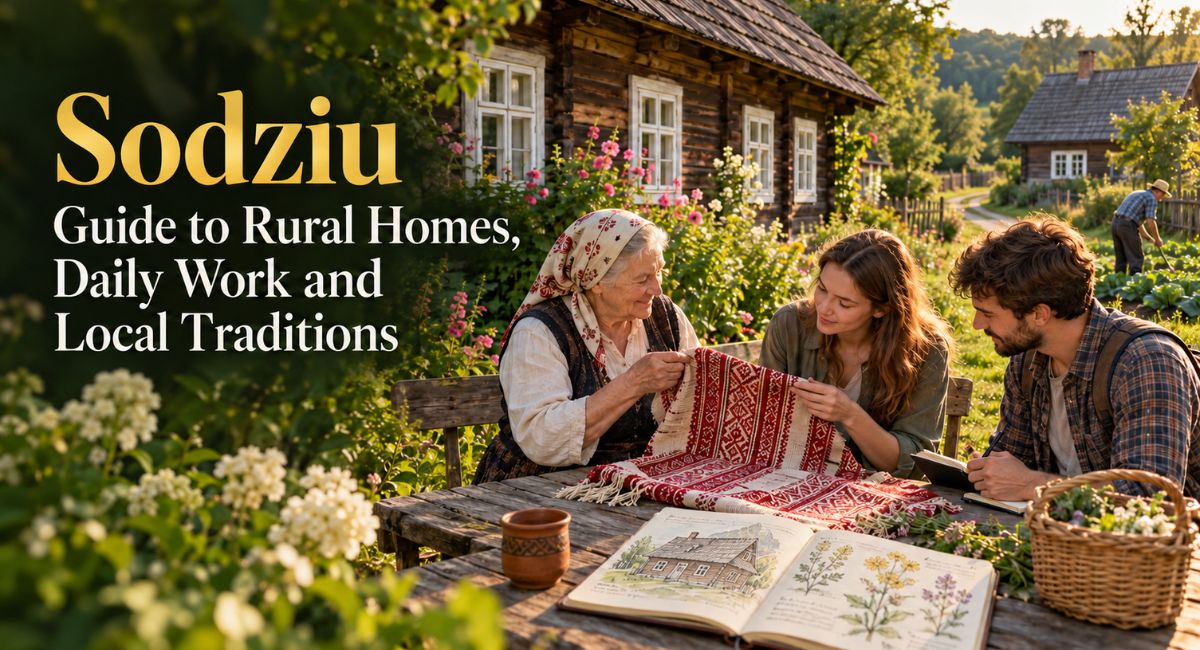
A wooden farmhouse can tell you much more than its age. The distance to the barn, the size of the garden and the tools beside the door all offer clues about daily life. For readers searching for Sodziu, these details provide a useful way into Lithuanian village heritage. Understanding this world means looking at how people lived, earned their food and marked important events. This guide brings those parts together, with practical ways to understand rural homes and the communities around them.
What Does Sodziu Refer To?
If you arrived here by searching for Sodziu, start with the Lithuanian word sodžius. It means a village or rural settlement and also has a place in the history of Lithuanian settlement. The plain search spelling does not show every Lithuanian letter or word ending. Checking the original word helps you find information that fits the topic and avoids mixing together different meanings.
This guide follows the countryside connection through homes, agricultural work and local customs. The similar-looking word žodžiu relates to words or spoken communication. It should be kept separate from the village term. A small spelling difference can lead to a completely different subject, especially when information passes through several websites or languages.
Why Place and Time Matter
Lithuanian rural life varies between regions. Forests, farmland and coastal waters offer different resources and support different jobs. Lithuania’s tourism agency connects Dzūkija with gathering wild food in forests, while Lithuania Minor has a strong coastal heritage. A house near fishing grounds may therefore tell a different story from a farmhouse surrounded by large fields. Begin with a region before making wider conclusions.
Time matters just as much. A medieval settlement and a village photographed around 1900 should not be treated as the same place in history. Land reforms, changing tools and new building methods all affected rural communities. When reading a museum label, look for the original location, date and purpose. These details help you understand which parts of the past a building actually represents.
How to Understand a Sodziu Homestead
A traditional homestead was a working property with several possible uses. Historical research describes modest farms with a dwelling, a grain store and an animal shelter. Wealthier households could have more buildings for different tasks. The house where people slept was therefore only one part of the property. Food supplies, livestock and tools all needed suitable places of their own.
When looking at a farmyard, imagine carrying a heavy bucket between buildings. Notice the distance between the house, storage areas and animal shelters. Then consider where grain could stay dry and where a cart could pass. This simple exercise helps explain the layout. It also encourages you to think about movement and work, rather than judging a homestead only by its appearance.
Inside a Traditional Rural House
The stove was an important feature of many historical Lithuanian farmhouses. Heating and cooking shaped how indoor space was used, although houses differed across regions and periods. Furniture, household tools and textiles give further clues about daily routines. A table might support meals and other tasks, while a chest could protect valued belongings. Use the display notes to identify each object’s purpose.
A Sodziu guide is more useful when it considers comfort as well as appearance. Ask how a room was heated, where daylight entered and how many people used the space. At the reconstructed Jonas Basanavičius birthplace, visitors encounter features such as low door frames and high thresholds. Details like these make the physical experience of an older home easier to understand.
Gardens and the Land Around the Home
The land beside a house could be productive as well as attractive. Historical records describe vegetable gardens and beehives on some homesteads. These examples show how food production extended beyond the main fields. However, one recorded property cannot represent every household. The size of a garden and the range of things grown depended on resources, local conditions and the people tending it.
In Sodziu research, it helps to connect the garden with the kitchen and storage spaces. Ask which crops were eaten soon after picking and which needed keeping. Consider how people reached water or protected a growing area from animals. If a museum garden has plant labels, read them before assuming that everything was grown for food. Some plants may have had decorative or other household uses.
Daily Work Through the Seasons
Farm work followed the growing year, while animal care created daily duties. Research on nineteenth and early twentieth century Lithuanian villages places farming and livestock at the centre of rural life. Feeding animals, preparing meals and caring for clothing continued alongside seasonal jobs. The amount of daylight, the weather and the needs of a crop could all affect the day’s plans.
Imagine a period when grain needed harvesting and animals still needed feeding. A household had to manage urgent field work without leaving regular duties unfinished. Later, the focus could shift towards storing supplies or preparing for colder weather. When studying an old tool, ask when it was used and what job came next. This builds a clearer picture than simply learning the tool’s name.
Food, Bread and Household Planning
Food gives a Sodziu guide a clear link between land and home. Rye bread is an important part of Lithuanian food heritage. In Daujėnai, traditional bread making connects local knowledge with equipment such as wooden dough troughs and bread ovens. A finished loaf therefore reflects several stages of work, from producing grain to preparing dough and managing the baking process.
When learning about a rural meal, ask where each ingredient came from. It might have been grown, kept from an earlier season, bought or exchanged. This question reveals how households used both their own resources and wider trade. Cooking demonstrations can make these connections easier to follow. Watch the preparation as well as tasting the result, and ask which methods belong to the period being shown.
Neighbours and Shared Work
Any Sodziu guide should explain the importance of help between neighbours. A Lithuanian practice called talka involved people joining together to complete work. Research from the Vaiguva area describes cooperation around tasks such as harvesting, processing flax and threshing grain. Arrangements varied, and help could involve returned labour, food or other forms of payment. It was a practical response to jobs needing several people.
Shared work also had a social side. Finishing a demanding task could bring a meal, customs and a sense of relief. Yet it is useful to ask who organised the work and what helpers expected in return. These questions reveal the responsibilities behind community life. They also prevent a friendly harvest scene from hiding the effort, planning and unequal resources involved in farming.
Crafts and Skills Passed Between Generations
Rural heritage includes skills that turn familiar materials into useful or meaningful objects. Straw garden making offers a clear Lithuanian example. Known as sodai, these hanging decorations use grain stalks arranged into geometric forms. UNESCO recognises the practice as living cultural heritage. The craft connects agricultural material with careful making, and the finished objects have been associated with celebrations and important household occasions.
At a demonstration, watch how the maker prepares and joins the material. Ask which parts require practice and how the skill was learned. A finished piece may look simple until you see the time behind it. If you buy a craft item, ask who made it and what it represents. Knowing its maker and purpose gives the object a clearer connection to local culture.
Local Traditions Through the Year
Seasonal celebrations offer another way to understand village communities. Užgavėnės, associated with Shrove Tuesday, includes customs connected with sending winter away and welcoming spring. Joninės, the midsummer celebration, is known for activities such as wreath making, singing and gathering around bonfires. These occasions bring people together while marking changes in the year. Their meaning is easier to understand when the season and local setting are considered.
A Sodziu article should describe customs with attention to place and time. The programme of a present-day museum event may bring several traditions together for visitors. It does not prove that every village once celebrated in exactly that way. Ask which practices are local, which have changed and which have been brought back. Those answers help explain how heritage continues through new generations.
Understanding Rural Change
When studying rural change, keep historical displays separate from present-day village life. A preserved farmhouse shows a particular period and household. Modern residents may use newer buildings, equipment and services while keeping selected older practices. Someone can value traditional cooking or craft skills without living as their grandparents did. This often involves choosing what remains useful or meaningful.
Older communities also contained differences in wealth and living conditions. Historical research records both modest homesteads and much larger properties. A spacious museum house may therefore represent a prosperous household rather than an average one. When comparing buildings, ask whose life each display shows. This question helps explain why two homes from a similar period can contain very different rooms, possessions and working spaces.
Where to Study Rural Homes Firsthand
The Open-Air Museum of Lithuania at Rumšiškės provides examples from several cultural regions. Its displays cover homes and rural life from the late eighteenth century to the first half of the twentieth century. Buildings contain period interiors and exhibits connected with agriculture, crafts and trade. Comparing two regional areas can help you notice differences that are difficult to understand from separate photographs.
The reconstructed Jonas Basanavičius birthplace offers a more focused example of a prosperous Suvalkija farm. It helps visitors connect living rooms, storage buildings and agricultural tools within one property. Before choosing a visit, decide what you want to understand. You might focus on heating, grain storage or textiles. A clear question makes it easier to use your time and remember the details afterwards.
Visiting With Care and Asking Better Questions
Treat a rural heritage visit as a chance to understand a place through evidence. Read labels, ask staff about unclear objects and find out whether buildings were moved or reconstructed. Take notes about dates and locations if you plan to write about the visit later. A photograph of a room can be useful, but the information explaining that room is just as valuable.
In inhabited villages, keep to public paths and respect private homes, gardens and farmyards. Ask before photographing residents or entering a working area. Check visitor information before travelling, especially if you need accessible routes or want a particular demonstration. Uneven ground and older doorways can affect a visit. Careful preparation gives you more time to listen, observe and understand the people who maintain the place.
Conclusion
A useful Sodziu guide connects rural buildings with the work and traditions around them. Start by checking the Lithuanian word, then look closely at the region, period and household being described. Follow the links between fields, gardens, food stores and living rooms. Ask how neighbours helped each other and how skills were passed on. These questions turn an attractive countryside scene into a fuller understanding of Lithuanian village heritage and the people whose daily efforts shaped it.
(FAQ’s)
1. What Does Sodziu Mean in This Guide?
The topic follows the Lithuanian word sodžius, meaning a village or rural settlement; checking the original spelling is important.
2. Did Every Traditional Rural Home Look the Same?
No, buildings differed according to region, period, household resources and the work carried out there.
3. What Was Talka?
Talka was a form of shared work in which people helped complete tasks, often with arrangements for food or returned labour.
4. Where Can I Find Examples of Historical Farmhouses?
The Open-Air Museum of Lithuania at Rumšiškės presents rural buildings and interiors from several Lithuanian regions.
5. How Can I Research Sodziu Further?
Start with Lithuanian dictionaries, museum collections and regional history, checking the dates and places behind each example.
You may also read: Assimilasjon Across Generations and Why Cultural Habits Change
Visit for more additional information: Loom Magazine