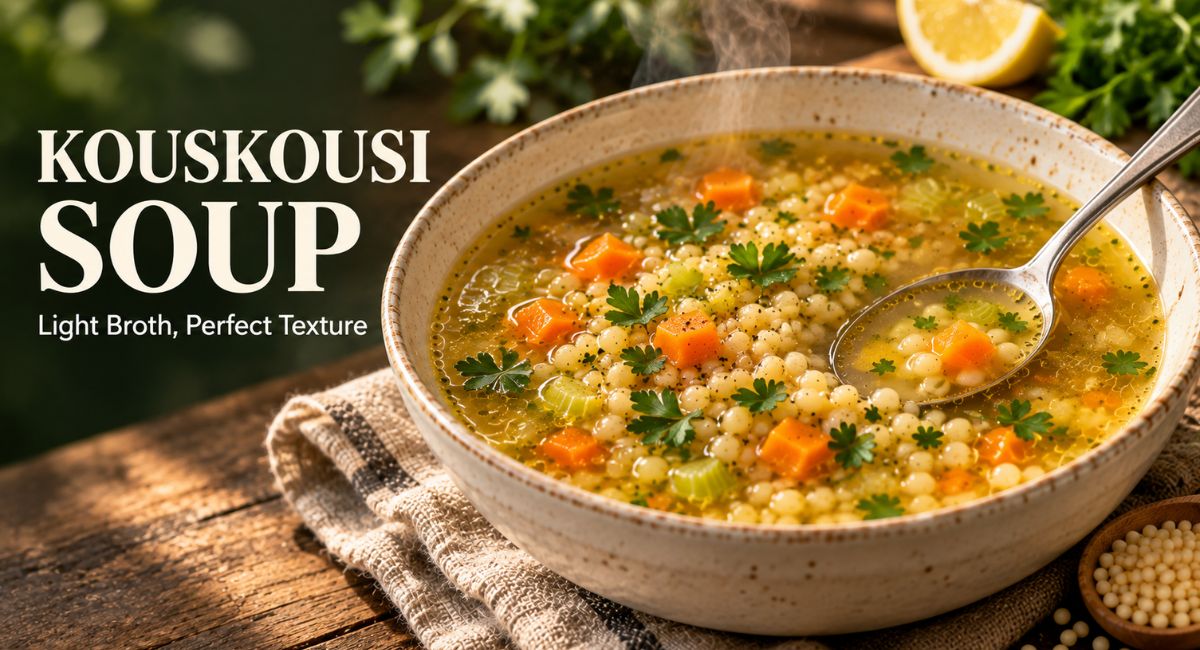
A soup can look just right on the stove, then turn thick before you finish setting the table. Small pasta often causes this change because it takes in liquid as it cooks and rests. Kouskousi can add a pleasant bite to a warm bowl, but the amount and timing matter. For a light soup, start with a small portion, leave enough broth, and consider cooking the pasta separately. These simple choices help you keep a soup that pours easily and still feels filling.
Check Which Type of Kouskousi You Have
Before cooking, check what is actually inside the packet. Greek food writer Diane Kochilas uses the name Kouskousi for a tiny Greek pasta in her recipes. Similar food names can appear on products that need different cooking methods. This article focuses on the pasta version. If your packet gives instructions for adding boiling water and covering it, follow those directions rather than treating it like pasta that needs a longer boil.
Read the ingredient list, cooking method, and suggested time together. A small shape does not always mean a very short cooking time. For example, MISKO lists 12 to 14 minutes for its couscousaki pasta, but that time does not apply to every brand. Use your own packet as the starting guide. Also check any listed allergens before serving the soup to someone with a food allergy.
Understand Why Pasta Makes Soup Thicker
Pasta changes soup in two main ways. It takes in some of the cooking liquid, leaving less free broth in the pot. It also releases starch into that liquid, which can give the soup more body. A little of this may be pleasant. Too much can leave you with a heavy mixture where the pasta and vegetables crowd together. The soup may still taste good, but its texture will be different.
The change can continue after you turn off the heat. Pasta left in broth can keep taking in liquid, while a long simmer also lets water escape as steam. This explains why a soup may become thicker during dinner or by the next day. Think about when you plan to eat it. Soup served straight away needs a different approach from a large batch saved for several meals.
Start With a Small, Measured Amount
For a first attempt at a light soup, try around 40 to 60 grams of dry Kouskousi per litre of broth. Treat this as a suggested starting range, not a fixed rule for every product. The size of the pasta, the other ingredients, and your preferred texture all matter. Keep the first batch modest. You can add more cooked pasta to a bowl, but removing tiny pieces from a full pot is awkward.
Measure the dry pasta before adding it. Pouring straight from the packet makes it easy to use more than you planned. If the soup already contains plenty of beans, potatoes, or meat, begin with the lower end of the range. A kitchen scale also helps you repeat a result you liked. Keep a note of the amount, the broth volume, and the brand so your next batch is easier to judge.
Cook Kouskousi Separately for a Lighter Broth
Cooking the pasta in another pan gives you more control over the finished soup. Bring water to a boil, add the pasta, and follow the packet directions. Stir occasionally and taste a few pieces near the end. They should be cooked through with a slight firmness, without a hard centre. Drain them through a fine sieve, since tiny pieces may slip through the large holes of a normal colander.
Put a small spoonful of warm cooked pasta into each bowl, then pour the hot soup over it. Add more if someone wants a larger portion. This method keeps most of the pasta cooking starch out of the broth and limits the time the pieces spend soaking in the soup. It also lets you keep the remaining soup base separate, which is useful when you expect leftovers or people eat at different times.
Add the Pasta Near the End of Cooking
You can cook Kouskousi directly in the soup when you plan to serve it soon. Prepare the broth and cook the ingredients that need the most time first. Carrots, potatoes, and raw meat should not depend on the pasta cooking time to become ready. Once the soup base is nearly finished, add the measured pasta. Leave enough time for it to cook according to the packet, then check its texture before serving.
Avoid adding it at the start of a long simmer. The vegetables may need more time than the pasta, leaving the small pieces too soft. The same problem can happen in a slow cooker if you add pasta hours before dinner. For better control, finish the soup base first and cook the pasta separately. Combine them when you are ready to eat, rather than leaving everything together through the full cooking period.
Use a Steady Simmer and Stir Gently
Watch the heat once the pasta enters the pot. Keep the soup bubbling gently enough to cook it, rather than letting it boil hard for a long time. A strong boil can reduce the liquid quickly and make it harder to judge how much broth remains. Check the packet for any specific cooking guidance. The aim is to cook the pasta through while keeping the vegetables in good shape.
Stir after adding the dry pieces, then stir occasionally as they cook. Move the spoon along the bottom of the pan to help stop sticking. There is no need to stir without a break or press the vegetables against the sides. Stirring does not prevent the pasta from taking in liquid. You still need to watch the cooking time and broth level, even when the pieces move freely in the pot.
Keep Extra Broth Ready Before You Start
Have some extra broth available if you cook Kouskousi in the soup itself. This saves you from searching for stock while the pot is becoming dry. Use the same type of broth as the soup base where possible. Vegetable broth suits a vegetable soup, while chicken broth works well with chicken. A version with less salt gives you more room to adjust the seasoning after you have settled on the texture.
Add the extra liquid in small amounts and stir before deciding whether you need more. For a medium pot, try about 100 millilitres at a time. Warm broth helps avoid cooling the soup too much. Water is also an option, especially if the flavour is already strong, but a large amount can make it taste weak. Taste again after adjusting the liquid, then add salt or pepper only if the soup needs it.
Leave Room for Beans, Potatoes, and Vegetables
Pasta is only one part of the finished bowl. Beans, potatoes, lentils, and vegetables also take up space, so a soup packed with them may need very little pasta. If you want a light broth, look at the whole pot before adding another ingredient. A mixture can feel too thick simply because there are too many solid pieces for the amount of liquid, even when the broth itself is fairly thin.
Think about which ingredient you want to notice most. For a chickpea soup, use pasta as a small addition. For a vegetable soup with just a little carrot and celery, a larger portion may fit better. Avoid adding a full serving of pasta, rice, and potatoes to the same small pot without increasing the broth. When using lentils or beans, keep them whole if you want less thickness from mashed ingredients.
Build Flavour Without Making the Soup Heavy
Kouskousi does not need a rich, thick base to make a satisfying soup. Start with onion, carrot, celery, or garlic, depending on the flavour you want. Soften them in a little olive oil before adding the broth. This gives the soup a useful base without adding flour or a large amount of cream. Cut the vegetables into small, even pieces so they are easy to eat alongside the tiny pasta.
Finish with a little chopped parsley, dill, black pepper, or lemon juice. Add these gradually and taste as you go. Lemon can brighten the flavour, but it does not replace missing broth or undo a thick texture. If you want grated cheese, try adding a small amount to each bowl rather than stirring a large handful into the pot. This keeps the base easier to adjust and lets each person choose their serving.
Try a Simple Vegetable Soup With Kouskousi
For a small practice batch, use one chopped onion, one carrot, one celery stick, a tablespoon of olive oil, and about 1.2 litres of vegetable broth. Start with 50 grams of dry pasta, cooked in a separate pan. These amounts offer a practical starting point for roughly four light servings. They are not a fixed traditional recipe, so adjust the vegetables and portion sizes to suit the meal you have planned.
Soften the chopped vegetables in the oil, add the broth, and simmer until the carrot is tender. Meanwhile, cook and drain the pasta according to its packet. Add a handful of spinach to the soup near the end and let it soften. Divide the warm pasta between the bowls and pour over the soup. Finish with parsley and a little lemon juice if you like. Check the first bowl before serving the rest, then adjust the pasta portion or broth.
Fix Soup That Has Already Become Too Thick
If the pasta is tender but the soup has become crowded, add warm broth a little at a time. Stir gently and check how easily the mixture pours from a ladle. Stop when you reach a texture you enjoy. Recheck the seasoning after adding liquid. A diluted soup may need a little more flavour, but adding salt before tasting can leave you with a large pot that is difficult to correct.
If the Kouskousi is still firm, it needs enough liquid and cooking time to finish. Add broth and continue checking rather than switching off the heat just to prevent thickening. If the pasta is already very soft, extra broth can loosen the soup, but it cannot restore the original bite. Serve it without another long simmer. For your next batch, use less pasta or keep it separate until the soup reaches the bowls.
Store and Reheat the Soup With Care
For leftovers, store the cooked pasta and soup base in separate containers when possible. Divide a large batch into shallow containers so it cools faster, and refrigerate promptly. Do not leave perishable food at room temperature for more than two hours, or one hour when the room is above 32°C. Keep the refrigerator at 4°C or below. Properly stored cooked leftovers should generally be used within three to four days.
Reheat only the portion you plan to eat. If the pasta is already mixed into the soup, add a little broth as needed and stir to spread the heat. Reheat leftovers to at least 74°C, checking with a food thermometer. Soup bases without pasta are also easier to portion and freeze. When serving a thawed base, cook a fresh small batch of pasta and add it at the end for better control over the texture.
Conclusion
Kouskousi works well in a light soup when you control the portion and cooking time. Check the packet, measure a modest amount, and leave enough broth for the other ingredients. Cooking the pasta separately offers the easiest control, especially when you expect leftovers. If you cook it in the soup, add it near the end and serve soon after it becomes tender. A small adjustment before serving can help you keep the bowl light and pleasant.
(FAQ’s)
1. Can I cook Kouskousi directly in soup?
Yes, add it near the end, follow the packet cooking time, and keep enough broth in the pot.
2. How much dry pasta should I use in a light soup?
Try 40 to 60 grams per litre of broth as a starting point, then adjust for your product and other ingredients.
3. Why does pasta soup become thicker the next day?
Pasta left in the soup continues taking in broth, leaving less liquid around the solid ingredients.
4. Should I rinse the pasta before adding it to soup?
You usually only need to drain it well; cooking it separately keeps most of its cooking starch out of the broth.
5. Can extra broth fix overcooked Kouskousi?
Extra broth can loosen the soup, but it cannot make very soft pasta firm again.
You may also read: Tatavel Review and What to Know Before Using Its Travel Guides
Visit for more additional information: Loom Magazine