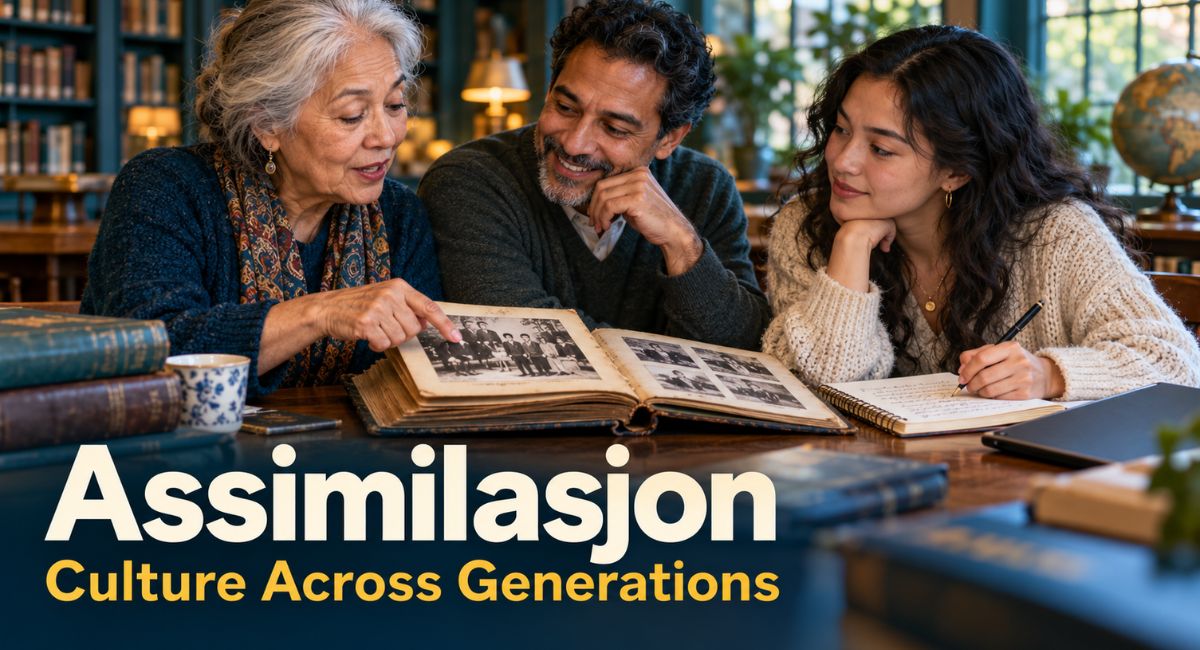
A grandparent may remember songs that a grandchild has never heard. A parent may cook a traditional meal, while a teenager prefers the food their friends eat. These small differences can tell a bigger story about culture, belonging, and change. Assimilasjon helps explain why some habits become less common as generations grow up in different surroundings. However, change does not follow the same path in every household. Understanding what shapes it can help people discuss their roots with more care and less judgement.
What Assimilasjon Means in Cultural Life
The word is Norwegian for assimilation. In discussions about culture, it describes a process in which a minority group becomes more like the majority around it. This can involve changes in language, customs, and everyday behaviour. In its strongest form, the group’s original cultural differences become much less visible or disappear.
The term also has meanings in subjects such as language science and biology. Here, the focus is on people and cultural habits. Buying a different lunch or enjoying a foreign film does not, by itself, mean someone has lost their culture. It is more useful to look at wider changes over time than to judge one personal choice.
How Assimilasjon Differs From Integration
Integration means taking part in the wider society while keeping a cultural identity of your own. Someone can learn the local language, work, study, and join community activities while continuing to follow their traditions. Participation and cultural belonging can exist together. Learning how a new society works does not require every older habit to disappear.
Imagine a person who speaks Norwegian at work and another language at home. They may celebrate local holidays alongside celebrations passed down by their parents. This is a useful example of integration. If their original language and customs gradually stop being passed on, the pattern may move towards cultural assimilation. Real lives can include a mixture of both processes.
Why Cultural Habits Change Over Time
Habits depend partly on the conditions around them. A meal that once used ingredients from a nearby market may need different ingredients after a move. A celebration may shift to the weekend because relatives cannot leave work during the week. These adjustments can begin for practical reasons, even when people care deeply about the original tradition.
Assimilasjon can develop through repeated changes in daily life, but not every adjustment is part of that process. Age, income, technology, and personal taste also matter. People who never leave their home country still develop different habits from their grandparents. Looking at these wider influences helps avoid blaming migration for every difference between older and younger people.
The First Generation and Its Link to Home
In migration discussions, the first generation usually means people who moved from another country. Those who arrived as adults may have strong memories of life before the move. Familiar music, food, and language can connect them with relatives and places they miss. Someone who arrived as a young child may have a different experience.
For this generation, Assimilasjon may involve balancing familiar routines with new demands. Consider a parent who learns local workplace customs but keeps traditional meals at home. Some habits change quickly because they help with daily tasks. Others remain important for many years. There is no single pace that every newcomer follows, and age alone cannot explain each person’s choices.
The Second Generation and Life Between Cultures
The second generation commonly means people born in a country with at least one parent who migrated there. Their early experiences may include different languages and expectations at home and school. They may understand a parent’s customs while also sharing the jokes, hobbies, and social habits of classmates. Both settings can feel familiar.
Assimilasjon may become more visible when younger people use the majority language more often or leave certain customs behind. Yet adapting to school life does not show how much someone values their roots. A young person might prefer local clothing while keeping a strong religious connection. These different choices show why appearance offers only a limited picture of cultural identity.
The Third Generation and Renewed Interest in Roots
Grandchildren of migrants may know their grandparents’ birthplace mainly through stories, photographs, or visits. Some grow up with a heritage language, meaning a language linked to their roots. Others know only a few words. Their connection depends on contact, learning opportunities, and personal interest, rather than a fixed rule about what grandchildren remember.
Assimilasjon does not mean every connection must weaken forever. A grandchild might choose to learn an older relative’s language or ask about a celebration that stopped before they were born. This renewed interest does not recreate the past exactly. It gives an old practice a place in a new life. Cultural change can include both loss and fresh interest.
Why Language Changes Across Generations
Language habits reflect where people spend their time and whom they speak with. Research by Pew Research Center on Hispanic Americans has found that Spanish use can decline across generations, even when people value keeping the language. This is a pattern found in a particular population, not a rule for every household or community.
Language is one part of Assimilasjon, but it cannot explain a person’s whole identity. Someone may understand a grandparent’s words yet find replying difficult. Another person may speak fluently but rarely follow traditional customs. For households wanting more language practice, a relaxed conversation during dinner may feel more useful than correcting every mistake. The aim can be connection, rather than perfect speech.
Food, Clothing and Celebrations in Daily Life
Consider a household that replaces an ingredient because the original one is difficult to find. The recipe changes, but cooking together may still carry the same meaning. Likewise, traditional clothing might be kept for special occasions instead of daily use. These examples show how the form of a custom can change while its personal value remains.
Celebrations can also develop new forms when relatives have different backgrounds. A shared meal might include dishes from several places. Children may grow up seeing this mixture as normal. Before calling such changes a loss, ask what still matters to the people involved. A familiar gathering, story, or act of kindness may carry more meaning than following every detail exactly.
How Schools, Work and Friends Shape Habits
Schools introduce shared routines, reading materials, and ways of speaking. Workplaces have expectations about communication and behaviour. Friendships bring new music, foods, and interests. Each setting gives people reasons to try unfamiliar practices. These influences can affect adults as well as children, although the opportunities and pressures may differ between them.
The response of the wider community matters too. A classroom where different names and languages receive respect gives children space to share their roots. Mocking those differences may encourage someone to hide them. When discussing cultural change, it is therefore worth asking how people are treated. Personal choice is easier to understand when the surrounding conditions are also considered.
The Difference Between Choice and Pressure
Assimilasjon can happen through personal choices, social pressure, or government action. Norway’s past Norwegianisation policies included efforts to suppress Sámi language and culture. A Truth and Reconciliation Commission examined Norwegianisation and its consequences, delivering its report in 2023. This history shows why the subject involves more than changing food, clothing, or entertainment preferences.
It also helps explain why a missing tradition should not automatically be seen as a lack of interest. People may have faced pressure that made passing it on difficult. When talking with older relatives, leave room for experiences they find painful or private. Understanding how a change happened is more helpful than assuming that someone freely chose every part of it.
How Technology Helps Traditions Travel
Video calls, online lessons, and shared recordings offer ways to keep contact across distance. A relative can explain a recipe on a call, while a grandparent can record a story for children to hear later. These tools create opportunities to share language and memories even when people cannot meet regularly. Their value depends on how people use them.
The same devices also introduce new habits through music, films, games, and social media. A teenager might practise a heritage language through videos and then spend the evening watching content in another language. Both activities can be part of ordinary life. Technology creates more possible connections, but it does not guarantee that a particular tradition will continue.
Ways to Keep Traditions Meaningful at Home
If Assimilasjon raises concerns about losing touch with your roots, start with one practice that people enjoy. Cook a dish together, learn a song, or ask an older relative about a childhood memory. Explain why the activity matters instead of presenting it as a test. People can take part more comfortably when they understand its meaning.
Choose a routine that fits the household’s time and interests. A short weekly call may be easier to maintain than a large monthly event. Ask before recording personal stories, and let younger people suggest how they would like to join in. A shared photo album, cooking session, or local cultural activity can offer a starting point without filling everyone’s schedule.
Making Room for More Than One Cultural Identity
Differences between generations can lead to arguments when people connect a habit with loyalty or respect. Before judging a choice, ask what it means to the person making it. A child who answers in a different language may simply find those words easier. A parent who protects a celebration may be trying to keep a connection with someone they miss.
Try discussing a specific concern instead of making a broad claim about someone’s identity. For example, ask how to make conversations with grandparents easier. This creates a clearer task than demanding that someone become more traditional. People can value several cultural connections at once. Allowing space for those connections can help relatives talk about differences without turning every disagreement into a test of belonging.
Conclusion
Assimilasjon across generations is shaped by language, relationships, schools, work, and the freedom people have to make choices. Some habits fade, others change form, and some return through a younger person’s interest. No single custom can measure a person’s whole connection to their roots. The most useful approach is to ask how changes happened and what people want to carry forward. Shared activities and patient conversations offer practical ways to keep those connections meaningful as everyday life changes.
(FAQ’s)
1. What does Assimilasjon mean in culture?
It describes a process in which a minority group becomes more like the majority, sometimes losing distinct cultural traits.
2. Does every generation lose more of its original culture?
No. Language, traditions, community ties, and personal interest develop differently in each household.
3. Is learning a new language the same as giving up your culture?
No. People can learn another language while keeping their existing language and customs.
4. Can younger people bring back older traditions?
Yes. They can learn a heritage language, practise a custom, or explore stories shared by older relatives.
5. How can relatives discuss cultural differences more calmly?
Ask about specific experiences, listen without blame, and choose shared activities that everyone can enjoy.
Visit for more additional information: Loom Magazine