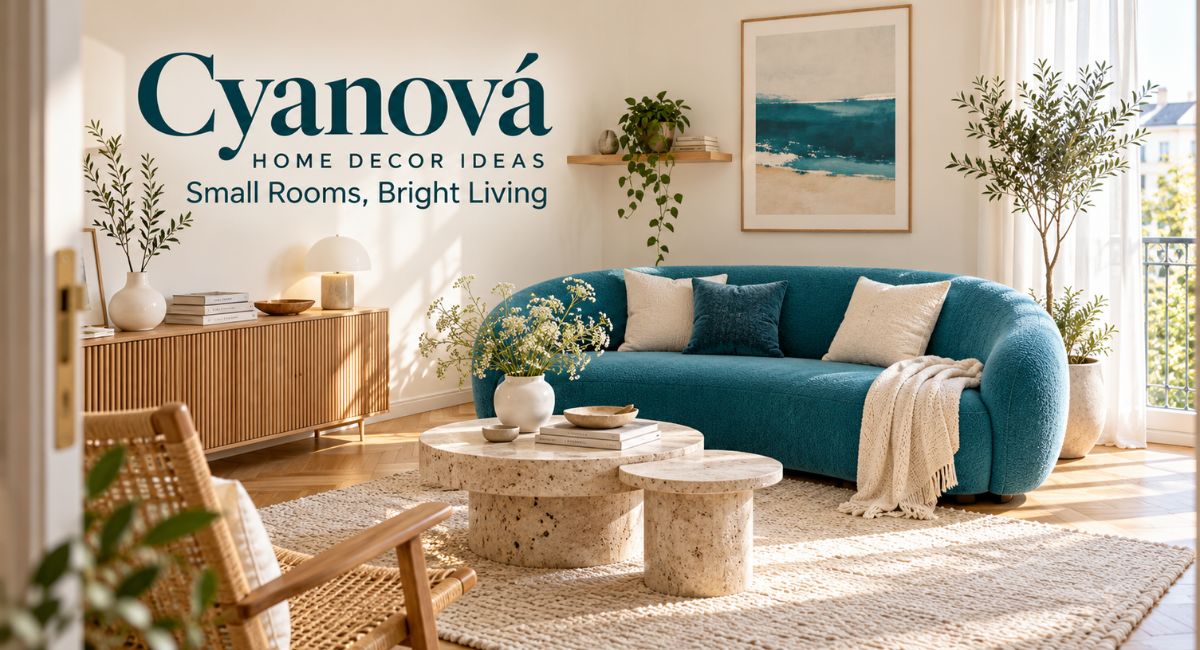
A small room can feel crowded even when you own only a few pieces of furniture. Sometimes, a different colour scheme helps the space feel more comfortable and inviting. Cyanová home decor adds a blue-green touch through paint, fabric, furniture, or small accessories. You can use a soft shade across a larger area or keep a brighter tone in a few details. The best approach starts with the room you have, including its daylight, floor colour, storage needs, and the things you already enjoy using.
What Cyanová Means in Home Decor
The word is linked to cyan, a colour between blue and green. In this guide, the decorating ideas cover bright cyan and softer tints of that colour. A pale shade can create a gentle background, while a stronger version draws attention to a chair, cushion, or painted wall. Choose the depth of colour that suits your taste and the room.
When shopping, take a physical colour sample with you. Product photos and colour names can give you a starting point, but paint and fabric may look different in your home. Place the sample beside your sofa, flooring, and curtains. This helps you choose a shade that belongs with your existing decor before spending money on several new items.
Choose a Shade That Suits the Room
Before choosing Cyanová paint, notice how much natural light enters the space. A room with large windows may suit a brighter blue-green shade. A darker room may feel more comfortable with a lighter tint and cream or warm white around it. Blue-green paint can appear different as the light changes, so avoid making your choice from one quick look.
Test a sample near the window and in a darker corner. Check it in the morning, later in the day, and under your usual lamps. Let painted samples dry fully before comparing them. You might prefer a slightly softer shade on the wall than on a cushion. Large areas of colour can feel stronger than the small sample first suggests.
Build a Simple Colour Palette
A simple palette makes it easier to use Cyanová in a small home. Start with a background colour such as warm white, cream, or light beige. Add your chosen blue-green tone, then include a natural material such as pale wood. This gives you a clear plan for shopping and helps separate items feel connected when you bring them together.
For example, cream walls, an oak table, and aqua cushions create a soft combination. White walls, blue-green artwork, and a few black details give a sharper look. Choose one direction before adding extra colours. If your flooring is dark brown, compare samples against it first. The floor covers a large area, so its colour matters as much as the wall paint.
Use Cyanová on One Wall or a Small Area
An accent wall is one way to introduce a stronger shade without changing the whole room. The wall behind a sofa or bed is often a useful place to start because the main furniture already draws attention there. Keep the nearby walls simple, then repeat a little of the chosen colour in a cushion or picture elsewhere in the room.
A smaller painted area can work just as well. Try the back of a bookcase, a cupboard door, or the wall around a reading corner. Think about what you will see from the doorway. If the colour highlights an area you enjoy, the choice has a clear purpose. Use the furniture and wall shape to decide where the painted area should begin and end.
Refresh a Small Living Room
You can bring Cyanová into a living room through textiles before making a bigger change. Two cushion covers and a throw may be enough to introduce the colour around an existing sofa. Mix a plain fabric with one gentle pattern for variety. A cushion with blue-green and cream in the same design can also connect the accent colour to pale walls.
Choose your rug with the whole seating area in mind. Measure the floor before buying, and check how the rug will sit beside the sofa and table. A design with a little blue-green can support your palette without covering everything in the same shade. Keep the main walking route clear, and give everyday items a home so the room stays comfortable to use.
Make a Compact Bedroom Feel Restful
In a small bedroom, bedding offers a simple way to change the mood. A soft aqua duvet cover works with white sheets, a wooden bed frame, and cream curtains. If you prefer plain bedding, try a coloured bedspread folded across the lower part of the bed. This places the colour in one area and makes it easy to change later.
Keep the bedside area practical. A slim table, a reading lamp, and space for a glass of water may be all you need. Choose wall art that includes your bedding colour, rather than adding several unrelated patterns. Closed storage can help with clothes and spare blankets. Before buying extra cushions, consider where you will put them when you go to sleep.
Bring Colour Into Kitchens and Bathrooms
Cyanová accents can work in a compact kitchen through tea towels, a small runner, or a few dishes on an open shelf. Start with items you use often. If you want a larger change, consider painting suitable cabinet doors. Check the preparation and finish needed for their material. A paint sample beside the worktop will help you judge the combination.
In a bathroom, towels and a washable bath mat offer an easy starting point. Blue-green fabric can look fresh beside white tiles and wooden accessories. For wall paint, choose a product suitable for the conditions in the room and follow its instructions. Keep daily toiletries together in a tray or cupboard so your colour choices sit within a tidy, useful space.
Use Curtains and Mirrors to Support Daylight
Curtains affect how much daylight you can enjoy. Choose a style that pulls clear of the glass when open, especially if the window is narrow. Pale fabric can fit comfortably within a soft colour scheme. If you need privacy or darkness at certain times, combine curtains with a suitable blind so the room still meets your daily needs.
A mirror can reflect daylight and help a room appear brighter. Try different positions before fixing it to the wall. Look at the reflection from your usual seat and from the doorway. A view of a window, artwork, or an open part of the room may suit the space better than a reflection of a crowded shelf.
Balance Cyanová With Warm Materials
Blue-green decor can feel softer when you add materials with warm tones. Light oak, woven baskets, cream fabric, and a tan chair are useful options. You do not need all of them together. Choose materials that fit the furniture you already own. For example, a wooden side table can bring warmth beside an aqua armchair and a pale wall.
Texture also gives the room variety without adding more colours. Try a smooth ceramic vase beside a woven basket, or a cotton cushion beside a knitted throw. Check these materials against your samples before buying. Keep comfort in mind as well as appearance. A fabric that feels pleasant to touch will be more useful on a sofa than one chosen only for its colour.
Choose Furniture and Storage That Fit
Furniture that serves more than one purpose can help you use a small room well. A storage footstool can hold blankets, while a sofa bed can support overnight guests. Measure carefully before buying either. Include the space needed to open lids, pull out beds, and move around the furniture once it is in use.
Keep the largest pieces in colours you are happy to live with for several years. You can then change the smaller blue-green details as your taste changes. A cupboard with doors can hold everyday clutter, while a small open shelf gives you room for a favourite object. Leave some space around displayed items so the shelf remains easy to clean and use.
Decorate a Rented Home on a Budget
If you want to try Cyanová without a major project, begin with removable items. Cushion covers, framed prints, towels, and a throw can travel with you when you move. Choose one area first, such as the sofa or bed. Living with the colour for a while helps you decide whether you want it elsewhere in the home.
Set a budget for the complete change. Painting costs may include preparation materials, brushes, and a finish suitable for the surface. Fabric costs may include cushion inserts or curtain alterations. Reuse what you can, such as a picture frame or lamp base. If you plan to paint a rented room, check the terms of your tenancy before choosing a permanent change.
Create Clear Areas in a Studio or Shared Room
A studio may need to support sleeping, relaxing, and working within the same space. You can repeat Cyanová in small amounts across these areas to keep the room connected. Try a cushion near the seating, a notebook on the desk, and a detail in the bedding. Each area can still have its own purpose without needing a completely different palette.
Place furniture according to the activities you do most often. A desk needs enough room for a chair to move, while a sofa should allow a clear route to the door. Use a rug or a change in furniture placement to mark the seating area. Keep work supplies in a drawer or box so you can put them away when the working day ends.
Choose Fabrics and Finishes for Daily Use
A colour scheme should suit the way you live. If your sofa gets plenty of use, check whether cushion covers can be washed and how they should be dried. For a kitchen chair, look for a finish you can clean easily. Read care labels before buying, especially when choosing pale fabric that may need frequent attention.
For painted furniture, use a product intended for the surface and allow the stated drying time. Handles, table edges, and cupboard doors receive regular contact, so preparation matters. Keep a record of the paint name and finish for future touch-ups. A small amount of leftover paint, stored according to its instructions, can help you repair marks without changing the whole colour scheme.
Conclusion
Cyanová home decor works best when the colour fits your room and your daily routine. Start with a sample or one useful accessory, then check it beside your flooring, furniture, and lighting. Build the look slowly with simple colour pairings, comfortable fabrics, and storage that suits the space. You can create a bright, welcoming room through a few thoughtful changes, while keeping the pieces that already work well in your home.
(FAQ’s)
1. What colour is Cyanová?
It is linked to cyan, a blue-green colour. For these decor ideas, you can choose bright shades or softer tints.
2. Which colours work well with blue-green decor?
Warm white, cream, beige, and pale wood are useful starting points. Small black details can give the room a sharper look.
3. Can this colour work in a room with little daylight?
Try a lighter tint with warm neutral colours. Check a sample under the lamps you normally use before painting.
4. Should I paint all four walls?
You can if you enjoy the sampled colour throughout the room. For a smaller change, try one wall or a painted bookcase.
5. What is the easiest way to try this colour?
Start with a cushion cover, towel, or framed print. Choose something useful that works with the colours already in your room.
Visit for more additional information: Loom Magazine