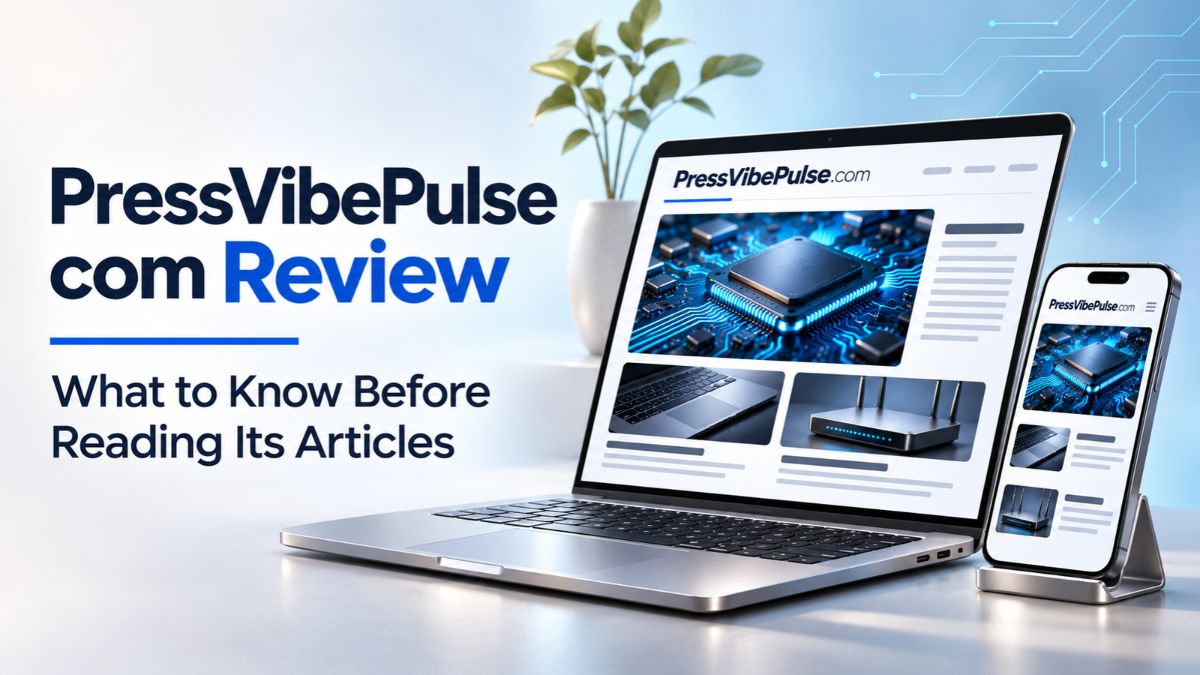
You open a search result because its title promises a clear answer. Then another question appears: who is behind this website, and can you trust the page? PressVibePulse com can raise that question, especially when similar names appear on different web addresses. This review explains what could be checked, what remains unclear, and how to decide whether an article deserves your time. It also shares practical ways to assess information before you use it, share it, or make a decision based on it.
What Is PressVibePulse com?
The keyword usually refers to the website address pressvibepulse.com, written with a space before the final part. Outside descriptions present it as an online publication with articles on several subjects. However, descriptions in search results cannot confirm everything about the current website. Its name alone also tells us little about its reporting standards, writers, or purpose. A reader needs more than a familiar media name to judge a publication.
One detail makes this search more confusing. Websites using the same branding were accessible at addresses ending in .org and .net. Their pages displayed articles, headings, and topic sections. Those observations describe the websites that were actually inspected. They do not establish what currently appears on the .com address or prove that all three websites belong to the same publisher.
What This Review Could Confirm
During research on 7 November 2026, the PressVibePulse com homepage could not be directly inspected. The version with www returned an access restriction. This means the review cannot offer a tested account of its current layout, full article collection, or reader features. It would also be wrong to describe the website as closed or unavailable to everyone based on that single research result.
The accessible .org and .net websites provided useful examples of how the name appears online. Their homepages and selected article pages could be examined. Still, there was not enough evidence to confirm a shared owner across the domains. This review therefore separates those direct observations from advice about evaluating articles. No speed score, security rating, or claim of full editorial quality is presented as a tested result.
Why the Website Address Matters
A page title and a website address are different things. The title can use almost any wording, while the address shows which domain you have reached. Before reading, look at the browser address bar. Pay attention to spelling and the ending after the name. If you intended to visit the .com address but arrived elsewhere, recognise that difference before using any account or contact details.
For example, an article on the .net website may have a visible writer and date. That information belongs to that page. It does not identify the writer of a separate .com article. The same applies to privacy policies, subscription buttons, and contact pages. Save the full address when bookmarking a useful page so you can return to the same publication later.
What Topics Appear on Similar Domains
The inspected .net homepage displayed sections for business, health and science, lifestyle, news, and technology. Its article listings also included social media and education topics. The .org homepage showed guides about other websites and technology subjects. These examples suggest a broad reading selection on those particular domains, rather than a publication built around one narrow subject.
For anyone searching for PressVibePulse com, this variety helps explain why online descriptions mention many interests. However, it should not become a confirmed category list for the .com website. When you reach an article, judge its actual subject and depth. A broad menu can help you discover ideas, but it does not show whether a writer has the knowledge needed for every topic.
How the Inspected Articles Are Presented
The selected pages used familiar blog features, including titles, dates, author labels, and section headings. One .net article discussed how social media helps entertainment trends spread. A .org page introduced another information website. Both divided their text into smaller sections. This layout can help readers scan a page and find a question that matches their needs, although it does not prove factual accuracy.
The author labels also varied. The selected .org guide used an admin label, while the .net entertainment article used a writer’s name. Neither observation establishes a rule for every page. When opening a new article, check whether the explanation offers real examples and answers its title. If several paragraphs repeat the same broad promise, you may need a more detailed source.
Who Writes and Runs the Website?
This review did not establish the verified legal owner or editorial team behind PressVibePulse com. That is a limit of the available evidence, rather than a finding that nobody owns or manages it. The inspected .net contact page supplied an email address, but that contact detail cannot identify the operator of a separate domain. A writer’s name also does not automatically identify the website owner.
Look for an About page that explains who publishes the material and who takes responsibility for mistakes. A useful author profile should describe relevant experience in clear terms. For example, a software tutorial becomes easier to assess when the writer explains which version they tested. A contact form is helpful, but a clear correction process gives readers a better way to challenge an error.
How to Judge an Article’s Sources
When reading a PressVibePulse com article, choose one claim that matters to your question and check what supports it. If a page gives a survey result, look for the original survey, its date, and the group it studied. If it describes a product feature, compare that detail with the maker’s own information. This small check can reveal whether the explanation gives enough context.
The inspected .net entertainment article named surveys and included outside links. However, naming a report and linking directly to evidence are different things. Follow the support for the specific claim you plan to use. A figure about one age group or country may not describe everyone. You do not need to investigate every sentence, but the main answer should rest on something you can examine.
Why Dates and Locations Matter
A clear publication date helps you understand when an article appeared. An update date can add useful context, especially when a topic changes often. However, check whether the text itself reflects the change. A guide with a recent date may still mention an older product version, an expired offer, or a feature that has moved to another menu. Read the detail that affects your next step.
Location matters as well. A service described for readers in one country may have different features elsewhere. For example, a tutorial might explain an account option that is unavailable in your region. Before following its instructions, confirm the country, service name, and version. These details make a practical guide more useful than a general promise that the same steps will work for every reader.
Is PressVibePulse com Free to Read?
Current payment and account requirements for the .com website were not confirmed through direct inspection. It would therefore be misleading to promise free access to every article or say that an account is never required. A subscription option on another domain cannot answer that question. Reading access, newsletters, and paid memberships can also be separate services, so check what a button actually offers.
If a page asks for your email address, read the nearby explanation before signing up. Find out whether you are joining a mailing list or creating an account. If payment is requested, look for the price, billing period, and cancellation terms. These are sensible checks for any unfamiliar publication. A search result that says an article is free does not replace the terms shown on the current page.
How to Assess Links and Recommendations
An article may explain a subject while also recommending a business or service. The inspected .net social media article, for example, included a link to a gaming review website within its discussion. That link was visible, but its presence alone did not establish whether there was a paid relationship. Readers should distinguish the article’s explanation from any recommendation that asks them to visit or use something else.
Before following a recommendation, look for a clear reason behind it. Does the writer describe a direct test, explain the limits, or compare suitable options? Check for labels such as advertisement, sponsored content, or affiliate disclosure. A commercial link does not settle whether the surrounding information is accurate. However, a recommendation becomes easier to judge when the page explains how and why it was selected.
What to Check When Reading on a Phone
The .com website’s mobile experience was not tested for this review. If you visit on your phone, begin with a simple reading check. Can you see the full title, follow the paragraphs, and open the menu without difficulty? Useful content should remain readable when you enlarge the text. Images should support the explanation rather than hide the answer you came to find.
Also notice whether the page stays in place while you read. Moving sections can make it difficult to follow instructions or tap the correct link. If a button opens a different page than expected, check the new address before continuing. You can save an article for later if the layout makes careful reading difficult. There is little benefit in rushing through a guide you cannot comfortably follow.
Is PressVibePulse com Safe and Reliable?
The available research does not support a firm safety rating for the .com website. A secure connection protects information travelling between your browser and a site, but it does not prove that an article is correct. Pay attention to browser warnings and confirm the address before sharing personal information. Reading a public page and entering private details are different actions, so consider what each page asks you to do.
Reliability needs a separate judgement. Look at the evidence behind the answer, the writer’s relevant experience, and any explanation of corrections. There is not enough verified information here to label the entire publication trustworthy or fraudulent. A useful article can explain a topic clearly while still leaving important questions unanswered. Check those gaps before using its advice for a purchase, professional task, or other significant decision.
Who Might Find the Articles Useful?
A clear general article can help a beginner learn the words needed to explore a subject. It may introduce an unfamiliar idea, explain a common question, or suggest an area for further reading. The useful test is whether you understand something specific after reading. You should be able to explain the answer in your own words, rather than simply remember the headline.
Readers considering PressVibePulse com should begin with one page that matches a real question. Read its answer, check an important claim, and decide whether it gives enough detail. If you need a full product test or specialist explanation, choose material that provides that depth. Your reading choice should follow the task in front of you, rather than a website’s name or the number of subjects in its menu.
Conclusion
PressVibePulse com needs a careful review because the .com homepage could not be inspected directly, while other domains displayed similar branding. Those other websites provide visible examples of articles, but they do not confirm the .com site’s ownership, features, or standards. Start with the exact address, then assess the page’s author, date, evidence, and purpose. A useful article should answer your question clearly and make its important claims possible to check. Let those details guide how much confidence you place in it.
(FAQ’s)
1. What is PressVibePulse com?
It is a search phrase usually used for pressvibepulse.com, whose current homepage could not be inspected for this review.
2. Are the .com, .org, and .net websites connected?
They use similar branding, but this review did not confirm shared ownership.
3. Does the .com website require an account?
Its current account and reading requirements were not confirmed.
4. Does a blocked research visit mean the website is down?
No, that result does not establish whether other visitors can open it.
5. How can I check whether an article is useful?
Look for a clear answer, a relevant author, current details, and evidence supporting its main claims.
You may also read: Afextop Com Review What to Expect From Its Articles and Guides
Visit for more additional information: Loom Magazine